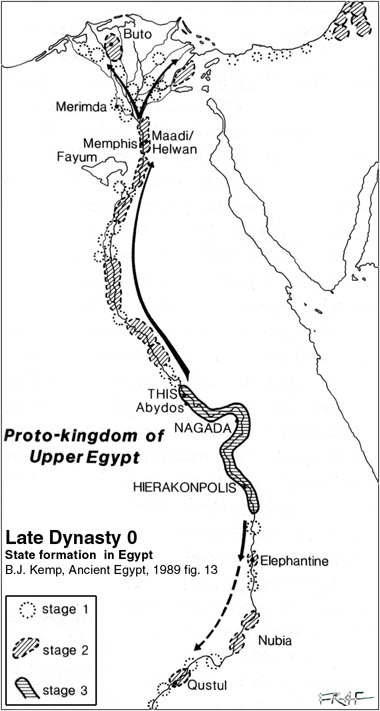
The Predynastic Period of Egypt (prior to ~3100 BC) is the time period between the early Neolithic and the beginning of the pharaonic monarchy beginning with King Narmer. However, the 3100 BC is an approximate date of the Predynastic Period ending due to the vast archaeological excavation in Egypt taking place revealing recent finds which show that the Predynastic Period progressed slowly. So now debates have scholars arguing about when exactly the Predynastic Period ended due to the more moderate advancement of civilization by the collective Egyptians. This argument and others like have brought about the term Protodynastic Period, which is also referred to as Dynasty 0. The Protodynastic Period is used to characterize the time in limbo which has some scholars labeling it predynastic and others dynastic. In other words, it made a middle ground to stop

the arguing.
Labeling of the Predynastic Period is done by cultures inhabiting Lower and Upper Egypt. The Predynastic Period begins with the southern cultures, like the Badarian, who were almost completely agrarian, and their northern counterparts, such as the Faiyum, who were oasis dwellers and still relied on hunting and fishing for the majority of their diet. Stone working, particularly that involved in the making of blades and points and furniture quickly reached a level almost that of the Old Kingdom would follow. Coming out of the Neolithic age their objects not only had a function but also an aesthetic value. Pottery became decorated - particularly the black-topped clay pots and vases that the era became noted for. Bone and ivory combs, figurines, tableware, and jewelry of all types and materials became abundant. While the rest of the world still slumbered in Paleolithic and Neolithic times, Egyptians were forging ahead.
The Predynastic Period then progressed to the Amratian period, or Naqada I. Here the pottery originally was decorated with simple bands of paint, but now they were adorned with clever geometric designs inspired by the world. Now pictures of animals were painted or carved into the pottery as well. Pottery shapes changed for practical and aesthetic reasons. Now the popular "dancer" figurines, small painted figures of women with upraised arms, hit the scene. However, the most important detail of this period is the development of architecture. With Egypt we have found that most of our knowledge comes from what the deceased were buried with and this case is no exception. From predynastic graves we find clay models of houses that resemble the rectangular clay brick homes of the Old Kingdom. This tells us that the idea of individual dwellings, towns, and urban planning started ~4500 BC.
The third stage of the Predynastic period known as the Gerzean period or Naqada II. The greatest difference people of Upper and Lower Egypt is seen in their ceramics. While Amratian pottery had some decorative aspects, its primary purpose was functional. Gerzean pottery, however, was developed more for decorative uses. Adorned with geometric motifs, highly realistic depictions of animals, and people Gerzean pottery surpasses all previous ceramic advancements. Their depictions of ostriches and ibexes may be a clue that the Gerzeans hunted in the sub-desert, as ostriches and ibexes are not found near the Nile. Here we first also find what could be first representations of gods. However, it is also possible that these are simply some form of historical records. Compared to the later periods, the Gerzean culture varies only slightly especially in is religious context and funerary customs. Tomb building was lavish with furnished underground rooms that were near replicas of the dwelling that the deceased had occupied in life. Yet the Amratian burials were simply a pit in the ground covered over by a skin-covered framework.
See here more for Predynastic intense information.

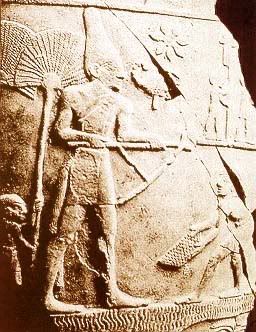 Separated now from the Predynastic Period of Egypt, the Protodynastic Period is that end and beginning of two very individual sets of civilizations. The time frame for the Protodynastic Period is ~3300-3000 BC. (Photo to left is a piece of pottery showing the Scorpion King that we now have the legends and movies of.)