31 May 2009

Crown of Lower Egypt

The crown of Lower Egypt is also known as the Red Crown or Deshret. It is shaped similar to a chair with a low front and tall back, from which protrudes a coil. Like the White Crown of Upper Egypt, the Deshret is also depicted on the Narmer Palette but on the reverse side. The Red Crown may very well have originated in Upper Egypt, although it became associated with Lower Egypt. Along with the Narmer Palette the crown is seen on shard from a large vessel dated to late Naqada I from near the town of Nubt/the city of Set. Below is the deity Neith seen wearing the Deshret crown of Lower Egypt.

Crown of Upper Egypt

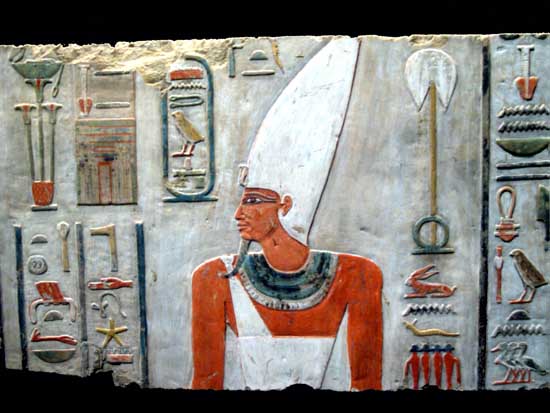
The crown of Upper Egypt, also known as the White Crown or Hedjet. The Hedjet was a tall white conical headpiece often seen alone or as in a united Egypt together with the Red Crown. Depicted as early as c.3000 BC on the Narmer Palette this crown was the pharaonic symbol of power for Upper Egypt. It was later to be combined with the Red Crown of Lower Egypt. Below is a relief depicting Nebhepetre Mentuhotep II of the 11th Dynasty wearing the white crown of Upper Egypt.

Coloring Pages

To print out a coloring page just click on the appropriate image to make it larger before printing.

3 Pyramids At Giza

Traditional Egyptian Barge

The Great Sphinx At Giza

A Cartouche

The Jackal-Headed god Anubis

The Infamous Bust of Nefertiti

A Benu Bird

An Egyptian Woman

The Jackal-Headed god Anubis

The Goddess Hathor In Snake Form

A Pharaoh

A Mummy

A Pharaoh

A Pharaoh

An Egyptian Man

29 May 2009

Imhotep

Imhotep, "the one that comes in peace," served under the 3rd dynasty pharaoh Djoser. At the beginning of modern history Imhotep existed as a mythological figure in the minds of most scholars until 1900's when he was established as a real historical entity. He was chancellor to Djoser and high priest of the sun god Ra at Heliopolis. He is considered to be the first engineer, architect, and physician in history known by name. The full list of Imhotep's titles were as follows: Chancellor of the King of Egypt, Doctor, First in line after the King of Upper Egypt, Administrator of the Great Palace, Hereditary nobleman, High Priest of Heliopolis, Builder, Chief Carpenter, Chief Sculptor and Maker of Vases in Chief.

Imhotep's historicity is confirmed by two inscriptions made during his lifetime: 1) on the base of one of Djoser's statues (CairoJE 49889) and 2) by a graffito on the enclosure wall surrounding Sekhemkhet's unfinished step-pyramid. The latter inscription suggests that Imhotep possibly outlived Djoser by several years and in all reason went on to serve in the construction of king Sekhemkhet's pyramid (which happened to be abandoned due to his short reign).

Family

Imhotep was a commoner by birth. However, his intelligence and determination enabled him to rise through his low status to become one of Djoser's most trusted advisers, as well as the architect of the Djoser's tomb, the Step Pyramid. The month and day of his birth are noted as the sixteenth day of Epiphi, third month of the Egyptian harvest (corresponding to May 31) but historians vary on whether or not this accepted. Imhotep may have been born in Ankhtowë, a suburb of Memphis in early Egypt yet other classical writers suggest that he was from the village of Gebelein, south of Thebes. His father is believed to have been an architect named Kanofer and his mother Khreduonkh (who is assumed belonged to the province of Mendes). Historians believe that his wife's name was Ronfrenofert.

In myth Imhotep's mother was a mortal named Kheredu-ankh who was later elevated to semi-divine status by claims that she was the daughter of Banebdjedet. Imhotep as the "Son of Ptah" had his mother sometimes claiming to be Sekhmet, the patron of Upper Egypt who was often said to be married to Ptah.

Impacts

During his lifetime Imhotep was one of the officials of the Pharaoh. Djoser. As such he designed the Pyramid of Djoser, also known interchangeably as the Step Pyramid, at Saqqara, Egypt. As an architect he is believed to been responsible for the first known use of columns in architecture. The historian Manetho credits Imhotep with inventing the method of a stone-dressed building during Djoser's reign even though he was not the first to build with stone. Before Imhotep pharaoh were still reduced to the simple looking mastabas.

Among Imhotep's credentials is being the founder of Egyptian medicine and the author of a medical treatise remarkable for being devoid of magical thinking. His so-called Edwin Smith papyrus contained anatomical observations, ailments, and cures with the oldest surviving papyrus copy written around 1700 BC (however, this may be a copy of texts a thousand years older).

About 100 years after Imhotep's death, he was elevated as a medical demigod. However, around 2,000 years after his death, he given the elevation to a full god and replaced Nefertum in the great triad at Memphis. Imhotep one of the very few mortals that ever reached the position of full gods. Imhotep is also associated with Thoth, the god of wisdom, writing and learning, and with the Ibises.

Death

The location of Imhotep's tomb was lost with history and is still unknown, despite renewed efforts to find it. However, archaeologists believe it is well hidden at Saqqara. With continued efforts we may one day soon see the tomb of the mastermind of Djoser's pyramid.

27 May 2009

Ramses II/Ramses the Great

Ramses II or Ramses the Great is the third pharaoh of the 19th dynasty. Often regarded as Egypt's greatest and most powerful pharaoh. He was one of Egypt's greatest warriors and peacemakers and made Egypt come to the height of her power. He created the model Egypt that anyone before or after could not replicate. According to some Egyptoligists and scholars Ramses II is believed to have been the Pharaoh of the Exodus. Ramses II was the first king in history to sign a peace treaty with his enemies, the Hittites, ending long years of wars and hostility.

Family

Ramses II was born to the principal wife Queen Tuy of the pharaoh Seti I. At 14 Ramses became Prince Regent by his father Seti I. In his early 20s became pharaoh and ruled Egypt for a total of 67 years by most records. This allowed him to be the second longest-ruling Pharaoh. Although Ramses II had a harem of wives, his favorite wife was Nefertari and it was presumed that he had over one hundred children with all his wives. Ramses II celebrated an unprecedented 14 sed festivals during his reign which was more than any other pharaoh. (The photo on the right is of a statue of Ramses II at Luxor)

Impacts

Ramses the Great built on a scale never before seen throughout Egypt and Nubia. He covered the land from the Delta into Nubia with buildings that no pharaoh had before done. He also founded the capital city of Pi- Ramses in the Delta which had previously served as a summer palace under Seti I. Ramses II built his magnificent moratorium temple the Ramesseum. His building was done on a scale unlike anything before. In Thebes, the ancient temples were transformed with each one of them reflecting honor to Ramses II as a symbol of this divine nature and power. When immortalizing himself into stone Ramses the Great insisted that his carvings were deeply engraved in the stone. This made them not only less susceptible to later alteration but also made them more prominent in the Egyptian sun, reflecting his relationship with the sun god, Ra. Among his other massive monuments is the complex of Abu Simbel which was carved out of sandstone facing east and the expansion of Luxor and Karnak. (The photo on the left is a picture of Abu Simbel)

Ramses II was a prolific ruler that fought to reclaim territory in Nubia and Western Asia. The Hittites and Asia Minor were his main opponents. As Pharaoh, he led a campaign known as the Battle of Kadesh where he tried to keep the newly acquired territory (modern day Syria) but lost the battle to the Hittites. Now seen as a standstill, Ramses II pulled back and Kadesh fell back into the hands of the Hittites. Later however, a treaty was signed, the territory divided, and Ramses II agreed to marry the daughter of the Hittite King. During his reign as Pharaoh, Ramses the Great attacked many of his enemies such as the Libyans, Nubians, and Syria.

Death

While his actual age upon is his in uncertain we do know he was in his 90s. He was buried in a tomb in the Valley of the Kings and his body later moved to a royal cache where it was discovered in 1881. Ramses II's mummy is now on display in the Cairo Museum. His tomb was KV7 in the Valley of the Kings and now remains empty. After years or being looted and weathered, it remains destroyed. Great amounts of effort are in progress with the hope of returning the tomb to a somewhat presentable stage. His mummy was eventually sent to Paris and diagnosed and treated for a fungal infection. During the numerous tests and examinations, battle wounds, old fractures, arthritis, and poor circulation were all revealed. For the last decades of his life, Ramses the Great was essentially crippled with arthritis and walked with a hunched back. A significant hole in the Pharaoh's mandible was detected while "an abscess by his teeth was serious enough to have caused death by infection, although this cannot be determined with certainty." Tests of the roots of Ramses II's hair proved that the original color of the king's hair was once red. In ancient Egypt, people with red hair were associated with the god Seth, the slayer of Osiris.

21 May 2009

Tutankhaten/Tutankhamen

Born Tutankhaten - meaning Living Image of Aten - King Tut quickly changed his name to Tutankhamen - meaning Living Image of Amen (alternately spelled with Tutenkh-, -amun and -amon). Ruling just after the crisis of Akhenaten, Tutankhamen ruled in 1333 BC – 1324 BC and was an Egyptian Pharaoh of the 18th dynasty. His name is also seen written as Amen-tut-ankh due to scribal custom which placed the divine name at the beginning of the phrase in order to honor the divine being.

Family

Tutankhamen's parentage is rather uncertain. We known from an inscription that calls him a king's son that he is of royal blood. But whose? Originally he was thought to be a son of Amenhotep III and his Great Royal Wife Queen Tiye, but that changed when research showed that Queen Tiye would have been more than fifty years old at the time of Tutankhamen's birth. Theories later progressed to the commonly held hypothesis that Tutankhamen was the son of Akhenaten/Amenhotep IV and his minor wife Queen Kiya. Queen Kiya's title was "Greatly Beloved Wife of Akhenaten" so this supports that she likely had borne him an heir. Evidence for this theory is a relief in Akhenaten's tomb showing a royal fan bearer standing next to Kiya's death bed fanning someone, probably a wet nurse holding a baby, possibly Tutankhamen.

Professor James Allen argues that Tutankhamen is more likely the son of the short-lived king Smenkhkare rather than Akhenaten. Professor Allen argues that Akhenaten consciously chose a female co-regent named Neferneferuaten as his successor rather than Tutankhamen (his supposed son). Continuing with this theory is that Tutankhamen was the son of Smenkhkare and Meritaten (one of the six daughters of Akhenaten and Nefertiti). Smenkhkare appears in Egyptian history when Akhenaten entered year 14 of his reign and it is assumed that during this time Meritaten married Smenkhkare. To be the father of Tutankhamen, Smenkhkare needed at least a three year reign to have his son the right age to inherit the throne.

Tutankhamen was married to Ankhesenpaten one of the daughters of Akhenaten and Nefertiti. After they re-establishment the traditional Egyptian polytheistic religion the couple changed the –aten ending of their names to –amen. Here they became Ankhesenamen and Tutankhamen. It is believed they had two female children whose mummies were found in Tutankhamen's tomb. Medical science suggests that both girls were stillborn and DNA testing started late last year in 2008 to determine whether they are Ankhesenamen and Tutankhamen's children.

Impacts

Tutankhamen was just about 9 years old when he became pharaoh and began his 10 year reign. Historically Tutankhamen did little that was significant. Since Tutankhamen began his reign at such an early age, his vizier and eventual successor, Ay, probably made most of the important political decisions during early part, if not entirety, of Tutankhamen's reign. His major contribution was the re-establishment of the old religion that was stopped due to his father, Akhenaten. His only reigning significance was allowing Egypt regain her former self in her religion. Little else is known about Tutankhamen's reign due to such sketchy evidence and reliefs as this period in history is shrouded in mystery. Tutankhamen had a huge impact on Egyptian history after his death with the discovery of his tomb in the Valley of the Kings, discovered by Howard Carter, was almost completely intact and is now the most complete ancient Egyptian tomb ever found.

Death

Tutankhamen was buried in the Valley of the Kings after his death in 1324 BC. His tomb was discovered in 1922 by Howard Carter and was almost fully intact. His tomb has received worldwide coverage and sparked a renewed interest in ancient Egypt. The public now typically associate his world famous burial mask with everything Egyptian. With Carter's discovery that had virtually escaped the hands of robbers Egyptologists have been able to get a bigger glimpse of Egyptian burial techniques and items. Howard Carter had been searching for Tutankhamen's tomb for years on a grant from his patron Lord Carnavon. However, Lord Carnavon decided to stop the excavations due to financial reasons but was persuaded by by Carter to continue for one more season. The discovery of the tomb occurred within just a few days after resuming work.

Inside the noticeably small tomb, Tutankhamen's mummy lay within a nest of three coffins. The two outer coffins were made of gold hammered over wooden frames and the innermost made of 110 kilograms of solid gold. On the king’s head was the magnificent golden portrait mask which is now famous. Within the mummy's wrappings were numerous pieces of jewelry and amulets.

There is much speculation about Tutankhamen's extremely early death at the age of about 19. Early research showed trauma to his skull and it was presumed that the young pharaoh had been murdered of had had an accident. Later tests showed that the earlier findings where not as significant. However, the belief that Tutankhamen was murdered this still the most widely believed. One version of the evidence can be seen here, here, and here.

20 May 2009

Akhenaten the "Heretic Pharaoh"

Born Amenhotep IV, meaning Amun is Satisfied, Akhenaten changed his name early on in his reign as pharaoh of Egypt. Meaning effective spirit of Aten Akhenaten is infamously known as the pharaoh who pushed Egyptians to become monothiestic. Reigning during the 18th dynasty Akhenaten created the worship of Aten. Akhenaten's strange appearance and mysterious behavior, as well as his connection with Nefertiti and with the ill-fated "boy king" Tutankhamen, have made him the subject of much passion and controversy in the last century or so.

Family

Akhenaten was born to Amenhotep III and his Chief Queen Tiye and was their younger son. It was not until the death of his brother, Crowned Prince Thutmose, that Akhenaten became designated as the successor to the throne. Upon Amenhotep III's death after a 38-year reign Akhenaten became pharaoh of Upper and Lower Egypt. Akhenaten's chief wife was Nefertiti who was made world-famous by her exquisitely molded and painted bust, now displayed in the Altes Museum of Berlin.

Akhenaten made a habit out of marrying his daughters-around year 12 of his reign Mekytaten, daiughter of Akhenatena and Neferteti, is shown in a relief in the royal tomb with her grief-stricken parents beside her dead body and a nurse standing nearby holding a baby. He is also known to have married two other daughters, Merytaten and Akhesenpaaten who later became Tutankhamun's wife.

Nefertit, made famous by her bust, has several curious aspects of her representations. In the early years of Akhenaten's reign, for instance, Nefertiti was an unusually prominent figure in art as she dominated the scenes carved on blocks of the temple to the Aten at Karnak. One block shows her in the warlike posture of pharaoh grasping captives by the hair and smiting them with a mace hardly the epitome of the peaceful queen and mother of six daughters. From that we can see that Nefertiti evidently played a far more prominent part role during her husband's rule than was normal.

Akhenaten is also believed to have been the father of Tutankhaten/Tutankhamen by his lesser wife Kiya.

Impacts

Akhenaten impacted Egyptian culture for many reasons and in many forms. Changes in the ancient Egyptian art style which presented himself in a very different manner from any of his predecessors was one of the main impacts.

Under Akhenaten people were portrayed as they actually were. Unlike previous Egyptian art Pharaohs and gods were portrayed as perfect looking individuals. But Akhenaten instead portrayed himself less god and perfect like and more human. However, the new style of art was portraying people how they were in their everyday lifestyles. Akhenaten is showed to be disfigured with an elongation of the head, large breasts, swollen stomach, and diminutive splayed legs. In fact, he looked more feminine than masculine. Surroundings also were now painted in detail. The vegetation and wild life around the Nile River was recorded in detail along with the pharaoh and his family. Previous Egyptian art had the pharaohs taller than subjects and with none but the gods as equals, Akhenaten had his surroundings as equals and scenes of him kissing his daughters and sitting with his family.

Religion is another major sect where Akhenaten had his influence. While in the end the result was not pretty and Egypt tried to erase their memory of Akhenaten, it is still interesting to see what he did during his lifetime. While the idea of the god, Aten, was not a new one Akhenaten's idea of a single god was to the Egyptians. The Aten is portrayed as a solar disc whose protective rays split in hands holding the ankh hieroglyph for life. According to Akhenaten the Aten was accessible only to him, which terminated the need for an intermediate priesthood.

At first, Akhenaten had a temple built to Aten outside the east gate of the temple of Amun at Karnak but clearly the coexistence of the two cults would not last. When Akhenaten realized this he proscribed the cult of Amun, closed the god's temples, and took over the revenues. Here is where the Egyptian populace arose up against Akhenaten, his actions where defying the gods of old! After a few more insidents involving other temples and Akhenaten trying to killing the worship of other gods, he decided to make a complete break. So in year 6 of his reign, Akheanten and his family left Thebes behind and moved to a new capital, Akhetaten-The Horizon of the Aten, known today as el-Amarna. It was here at Akhenten/el-Amarna that only worship of the Aten was permitted and forced.

Death

During the 12th year of Akhenaten's reign, his mother Queen Tiye joined him in his city. Here we see that Nefertiti was no longer a favorite to Akhenaten and she disappeared from records. Nothing is known as so why she left and where she went, but her daughter quickly took her place. Akhenaten's daughter was then replaced with Ankhesenpaaten. The 18th year of his reign Akhenaten died and everything was destroyed and demolished after his death. The city of Aten was laid to ruins and Akhenaten, the heretic pharaoh's mummy never found.

14 May 2009

Ptolemaic Period

The end of the Late Period in Egypt brought in the age of the Ptolemaic Dynasty/Period. It was in 332 BC that Alexander III "the Great" of Macedon conquered Egypt with little resistance from the Persians. Egyptians welcomed him as deliverer and god. Alexander in turn visited Memphisand went on pilgrimage to the oracle of Amun at the Oasis of Siwa. There the oracle declared him to be the son of Amun-Re. Alexander earned favor with the Egyptians by respecting and slightly being involved in Egyptian rituals and religion. Alexander founded a new Greek city in Egypt named Alexandria. It is this city that became a major commercial port, where Alexander was buried, and that quickly became Egypt's administrative capital and an intellectual centre.

Ptolemaic Egypt began however when Ptolemy I Soter declared himself Pharaoh of Egypt in 305 BC and the dynasty ended with the death of the infamous Cleopatra VII of Egypt during the Roman conquest in 30 BC. The Ptolemaic Period was a powerful Hellenistic state, extending from southern Syria, to Cyrene, and to the frontier with Nubia. The Ptolemies to gain recognition by the native Egyptian populace named themselves as their successors did before them - pharaohs. Later on in the dynasty the Ptolemies took on Egyptian traditions and had themselves portrayed on public monuments in Egyptian style and dress, and participated in Egyptian religious life. Yet all of this did not appease all Egyptians, the Ptolemies still faced rebellions often caused by an unwanted regime and were involved in foreign and civil wars that led to the decline of the Ptolemaic dynasty and its eventual annexation by Rome.

The uniqueness of Ptolemaic art came from the fusion of existing Egyptian culture and Hellenistic influences which was designed to support the new administrative system imposed on the Egyptians and was completely intentional. The Ptolemies stressed their desire to support Egyptian culture and many temples were indeed built during this period. The new combo including the Hellenistic influence was seen in both in clothing and the more realistic representation of facial features. Particularly easily seen in some of the coffins which were provided with portraits of the deceased. Literature flourished due in part to the mass Library at Alexandria. During the Ptolemaic Period Manetho composed his history of Egypt and the tri-lingual decree was inscribed on the Rosetta Stone.

The rulers of the Ptolemaic Period had certain characteristics which make them stand out. All of the male rulers took the name Ptolemy while the queens were usually called Cleopatra. The most famous member the queens of the Ptolemies was the last queen, Cleopatra VII, known for her role in the Roman political battles between Julius Caesar and Pompey and with Octavian and Mark Antony. Her suicide during the conquest by Rome was the end of Ptolemaic rule in Egypt and the end of Egypt as she was known.

Ptolemaic Dynasty Rulers

Ptolemy I Soter | c. 305-282 BC

Ptolemy II Philadelphus | c. 284-246 BC

Ptolemy III Euergetes | c. 246-222 BC

Ptolemy IV Philopator | c. 222-204 BC

Ptolemy V Epiphanes | c. 204-180 BC

Ptolemy VI Philometor | c. 180-164 BC & 163-145 BC

Ptolemy VIII Euergetes II (Physcon) | c. 170-163 BC & 145-116 BC

Cleopatra II Philometora Soteira | c. 131-127 BC

Cleopatra III Philometor Soteira Dikaiosyne Nikephoros (Kokke) | c. 116-101 BC

Ptolemy IX Soter II (Lathyros) | c. 116-107 BC & 88-81 BC

Ptolemy X Alexander I | c. 107-88 BC

Berenice III Philopator | c. 81-80 BC

Ptolemy XI Alexander II | c. 80 BC

Ptolemy XII Neos Dionysos (Auletes) | c. 80-58 BC & 55-51 BC

Cleopatra V Tryphaena | c. 58-57 BC

Cleopatra VII Philopator | c. 51-30 BC

Arsinoe IV | c. 48-47 BC

Late Period

By the time the Late Period began the international prestige of Egypt had declined to almost ruin and the troubles of the Third Intermediate Period was only escalating. The Late Period started with the 25th dynasty to the 31st dynasty which concluded all of the Egyptian kings every to sit on the Egyptian throne.

Egypt's allies had fallen firmly into the sphere of influence from Assyria. While Egypt ousted Assyria in size and wealth, Assyria had a greater supply of timber allowing the production of more charcoal needed for iron-smelting and thus giving Assyria a greater supply of iron weaponry. This single difference became critical during the Assyrian invasion of Egypt in 670 BC. Despite numerous victories against the Assyrians, Thebes was eventually occupied and Memphis was sacked. The 25th dynasty ended with its rulers stuck in the backwater of the city of Napata.

The 26th dynasty were client kings established by the Assyrians. Stability reigned for a time until the Persians came unto the scene. The Persians had already taken Babylon and Egypt was no match. Egypt was defeated and the Persian king Cambyses, now assumed the formal title of Pharaoh. For a time the Egyptians were controlled by the Assyrian satrap but a one man who founded the 28th dynasty, Amyrtaeus, prince of Sais, rebelled against the Persians. The Persians were defeated, for about 6 years.

The 29th Dynasty ruled from the city of Mendes not not quite 20 years. The 30th dynasty then came and attempted to reestablish Egyptian art but failed with the Persians reoccupied in 343 BC. The 31st dynasty signaled the beginning of Egyptians never to sit on the throne again as the Persians dominated throughout Egypt. Egypt was now lost as the great empire she had once been.

25th Dynasty Rulers

Alara | c. 780-760 BC

Kashta | c. 760-747 BC

Piye | c. 747-712 BC

Shebaka | c. 712-698 BC

Shebitku | c. 698-690 BC

Taharqa | c. 690-664 BC

Tantamani | c. 664-657 BC

26th Dynasty Rulers

Ammeris | c. 715-695 BC

Stephinates | c. 695-688 BC

Nekaub | c. 695-688 BC

Nekau | c. 672-664 BC

Psamtek I | c. 664-610 BC

Nekau II | c. 610-594 BC

Psamtek II | c. 595-589 BC

Apries | c. 589-570 BC

Ahmose |c. 570-526 BC

Psamtek III |c. 526-525 BC

27th Dynasty Rulers

Cambyses | c. 525-522 BC

Darius I | c. 521-486 BC

Xerxes I | c. 486-466 BC

Artaxerxes I | c. 465-424 BC

Xerxes II | c. 424 BC

Sogdianus | c. 424 BC

Darius II | c. 424-404 BC

Artaxerxes II| c. 404-402 BC

28th Dynasty Rulers

Amyrtaios | c. 405-399 BC

29th Dynasty Rulers

Nepherites I | c. 399-393 BC

Hernebkha | c. 393-391 BC

Psammuthis | c. 392-390 BC

Hakoris | c. 392-380 BC

Nepherites II | c. 380 BC

30th Dynasty Rulers

Nectanebo I | c. 380-362 BC

Teos | c. 362-360 BC

Nectanebo II| c. 360-342 BC

31st Dynasty Rulers

Artaxerxes III Ochus | c. 342-337 BC

Arses | c. 337-335 BC

Darius III Codomannus | c. 335-332/30 BC

13 May 2009

Third Intermediate Period

The golden age of Egypt was waning and the Third Intermediate Period began. Characterized by the country's fracturing kingship the priests were becoming increasingly powerful. Ranging from the 21st dynasty to the 24th dynasty the country started off being ruled by the pharaoh Smendes I from the city of Tanis and the High Priests of Amun ruling at Thebes ruling the south of the country.

The country was reunited for a time in the 22nd dynasty but again fell into a civil war engulfing people between the forces of Pedubast, who had proclaimed himself Pharaoh versus the existing line of Takelot II/Osorkon B. Osorkon eventually won the battles but it lead to little relief from the fighting. Egypt then fell back into the dark ages while being ruled under numerous city states within the once great land.

At the end of the Third Intermediate Period the Nubians to the south took full advantage of this division and political instability. The ruler Piye marched north into Egypt and defeated the combined might of several native Egyptian rulers Peftjaubast, Osorkon IV of Tanis, Iuput II of Leontopolis and Tefnakht of Sais. This was the beginning of the 25th dynasty.

With the weakening of single royal authority in the Third Intermediate Period, the temple network emerged as a dominant sphere for political aspirations, social identification, and artistic production. Kings became the doormats for the priests doors.

Little architecture took place during the Third Intermediate Period. However, the creation of bronze temple statuaries of gods, kings, and great temple officials flourished as the bronze age was dawning. Temples now became with the sanctity and safety they offered, favored burial sites for all people. Metal working was hitting an amazing high as gold and other metals were being used elaborately.

Instead of emphasis being placed on the pharaoh alone is was placed on the pharaoh as the child/son of a divine pair. This is seen on a series of delicate relief-decorated vessels and other small objects chiefly in faience and also precious metal. Manifested architecturally in the emergence and development this was seen as well in subordinate temples where the birth of a juvenile god identified with the sun god and the king was celebrated.

21st Dynasty Rulers

Pharaohs in the city of Tanis:

Smendes | c. 1069-1043 BC

Amenemnisu | c. 1043-1040 BC

Pinodjem I | c. 1040-992 BC

Amenemope | c. 992-984 BC

Osorkon I | c. 984-978 BC

Siamun | c. 978-959 BC

Pinodjem II |c. 959-945 BC

Priest in Thebes:

Herihor

Piankhi

Masahart

Djedkhonsefankh

Menkheperre

Iuput

Sheshonq II

22nd Dynasty Rulers

Shoshenq I | c. 945-924 BC

Nimlot I | c. 924

Osorkon I | c. 924-909 BC

Takelot | c. 909-? BC

Shoshenq II | c. ?-883 BC

Osorkon II | c. 883-855 BC

Takelot II | c. 860-835 BC

Shoshenq III | c. 835-783 BC

Pami | c. 783-773 BC

Shoshenq V | c. 773-735 BC

Osorkon IV | c. 735-712 BC

23rd Dynasty Rulers

the main branch of rulers was in Thebes:

Pedubastis I | c. 828-803 BC

Shoshenq IV | c. 803-797 BC

Osorkon III | c.797-769 BC

Takelot III | c. 769-774 BC

Osorkon IV | c. 774-754 BC

Iuput II | c. 754-725 BC

rulers in Hermopolis:

Thotemhat |

Nimlot III |

Djehutiemhat |

rulers in Heracleopolis:

Peftjauwybast |

Nakhke |

rulers in Tanis:

Sekhemkare |

Shepseskare-Imere |

Neferkare-Pepi |

Pedubastis II |

24th Dynasty Rulers

Osorkon |

Tefnakhte I |

Bakenranef |

Padinemti |

Tefnakhte II|c. ?-747 BC

12 May 2009

The New Kingdom Period

At the end of the Second Intermediate Period the Theban rulers of Dynasty 17 drove out the Hyksos kings. This started the beginning of the Egyptian Empire, or the New Kingdom Period. Ranging from the 18th-20th dynasties it is perhaps the most famous of all the ages because of the kings it saw sit on the throne. The successors of Dynasty 17 conducted such military campaigns that they extended Egypt's influence in the Near East and established Egyptian control of Nubia to the fourth cataract. As a consequence, the pharaohs gathered unimaginable wealth which allowed them to reinstate themselves as gods and lavish wealth into the religious system.

Thebes remained a main cultural and religious center throughout the New Kingdom Period. It was here that the pharaohs built their mortuary temples and were laid to rest mass rock-cut tombs decorated with exquisite paintings and painted reliefs illustrating religious texts concerning the afterlife. Due to the growing demand of the new tombs a town was established near Thebes to the west for the workers who thrived off of the work of kings. Here at Deir el-Medina the workers left an unimaginable wealth of information about life in an ancient Egyptian community of artisans and craftsmen.

The New Kingdom Period is now known for the monumental architecture, estuaries honoring the gods and pharaohs, political stability, economic prosperity, and countless artistic masterpieces. This time also contained some of Egypt's most famous pharaohs including Ahmose I, Hatshepsut, Thutmose III, Amenhotep III, Akhenaten and Tutankhamen. Queen Hatsheput is a legend who concentrated on expanding Egypt's external trade, Thutmose III was the Napoleon of Egypt who expanded Egypt's army and wielded it with great success, and King Tut is the mysterious boy king.

Next to Tutankhamen, Amenhotep IV is one of the most famous pharaohs of the 18th Dynasty. He is the one who changed his name to Akhenaten to establish the worship of the Aten and whose exclusive worship of the Aten is often interpreted as history's first instance of monotheism. (Biblical scholars disagree however) Due to his quick betrayal of the old ways of the Egyptian religion Akhenaten's religious fervor is one of the reason why he was subsequently written out of Egyptian history and most traces of him destroyed (or attempts at least).

Ramses II, the Great, ruled during the 19th Dynasty and he sought to recover territories in the Levant that had been held by the 18th Dynasty lost due to Akhenaten's lack of interest outside of Egyptian borders. Ramses II is also famed for the large number of children he sired by his various wives and concubines. The mass funerary complex in the Valley of the Kings he built to house his family has proved to be the largest funerary complex in Egypt by far.

To close the New Kingdom Period, 20th dynasty pharaoh Ramses III was the last great king. In Year 8 of his reign, the Sea Peoples invaded Egypt by land and sea and Ramses III defeated them in world reknown battles. He claimed that he incorporated them as his subjects and settled them in Southern Canaan, although evidence suggests that they forced their way into Canaan. Cost to battles the Sea Peoples exhausted Egypt's treasury and aided in the gradual decline of the Egyptian Empire in abroad and at home. These difficulties were recorded with the first known labor strike in history occurring during Year 29 of Ramses III's reign. Food rations for royal tomb-builders and artisans in the village of Deir el Medina could not be provisioned and the people went on strike.

After Ramesses III's death the decline was quick and Egypt had seen its best years fly by as she headed again into a dark period, the Third Intermediate Period. As Egypt was beset by a series of droughts, below-normal flooding levels of the Nile, famine, civil unrest and official corruption she was done with the glory days.

18th Dynasty Rulers

Ahmose | c. 1550-1525 BC

Amenhotep I/Djeserkare | c. 1525-1504 BC

Thutmose I/Aakheperkare | c. 1504-1492 BC

Thutmose II | c .1492-1473 BC

Hatshepsut/Maatkare | c. 1473-1458 BC

Thutmose III/Menkheperre | c. 1458-1425 BC

Amenhotep II/Aaakheperure | c. 1427-1400 BC

Thutmose IV/Menkheperure | c. 1400-1390 BC

Amenhotep III/Nebmaatre | c. 1390-1352 BC

Amenhotep IV/Akhenaten/Neferkheperurawaenre | c. 1352-1336 BC

Neferneferuaten | c. 1336 BC

Tutankhaten/Tutankamen/Nebkheperure | c. 1336-1327 BC

Ay/Kheperkheperure | c. 1327-1323 BC

Horemheb/Djeserkheperure | c. 1323-1295 BC

19th Dynasty Rulers

Ramses I/Menpehtyre | c. 1295-1294 BC

Seti I/Menmaatre | c. 1294-1279 BC

Ramses II/Usermaatre Setepenre | c. 1279-1213 BC

Merenptah | c. 1213-1203 BC

Amenmessu | c. 1203-1200 BC

Sety II | c. 1200-1194 BC

Saptah | c. 1194-1188 BC

Tausret | c. 1188-1186 BC

20th Dynasty Rulers

Setnakht | c. 1186-1184 BC

Rameses III/Usermaatre Meryamun | c. 1184-1153 BC

Ramses IV | c. 1153-1147 BC

Ramses V | c. 1147-1143 BC

Ramses VI | c. 1143-1136 BC

Ramses VII | c. 1136-1129 BC

Ramses VIII | c. 1129-1126 BC

Ramses IX | c. 1126-1108 BC

Ramses X | c. 1108-1099 BC

Ramses XI | c. 1099-1069 BC

11 May 2009

Second Intermediate Period

The Second Intermediate Period began with the 15th dynasty and ended with the 17th dynasty. This period in Egyptian history is known for not only being dark like the First Intermediate Period, but also for the invasion of the Hyksos. Marking a period when Ancient Egypt once again fell into disarray between the end of the Middle Kingdom and the start of the New Kingdom the Second Intermediate Period is when the Hyksos made their appearance in Egypt and whose reign comprised the 15th and 16th Dynasties. The large-scale immigration of foreigners into the Nile Valley during the Middle Kingdom eventually led to the end of the Middle Kingdom as these foreigners remained non-naturalized "Asiatics." In other words they established their own communities and lived by their own laws. As their numbers increased they became a threat to the already weak power of the Egyptian monarchy.

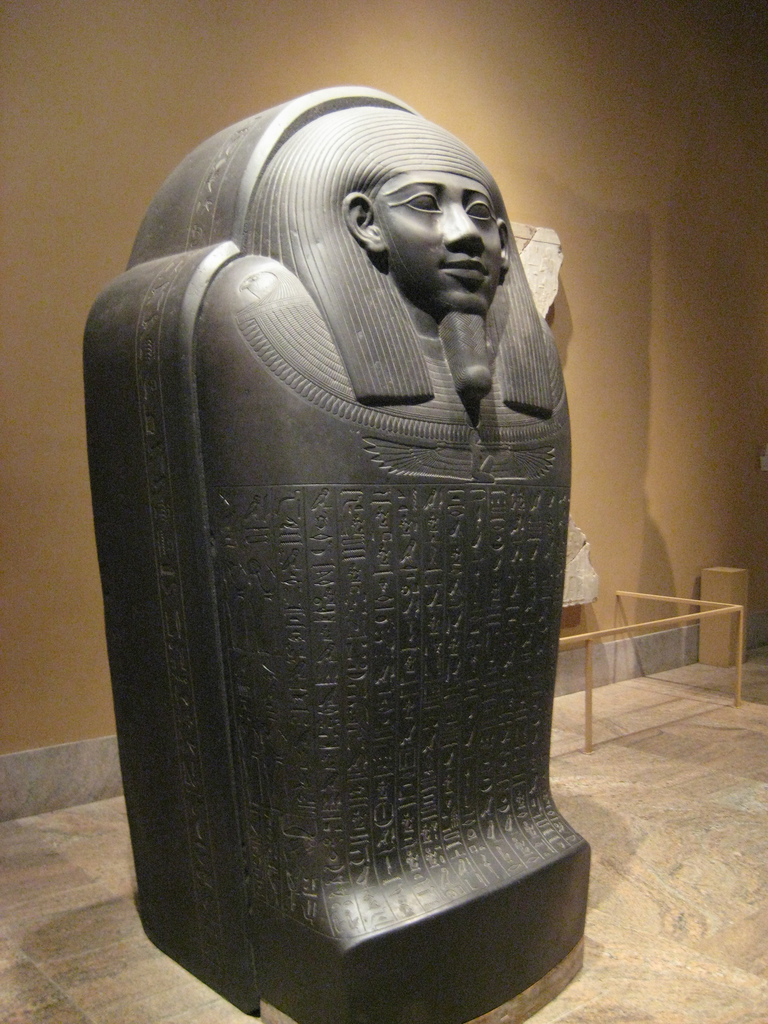
The 13th Dynasty was unable to hold onto the entire territory of Egypt and the provincial ruling family in Xois (located in the marshes of the western Delta) broke away to form the 14th Dynasty. This splintering of the land accelerated after Sobekhotep IV for it was during his reign that the Hyksos may have made their first appearance. Around 1720 BC the Hyksos took control of the town of Avaris (modern Tell ed-Dab'a/Khata'na). The Hyksos overran Egypt led by Salitis, the founder of the 15th Dynasty, which was succeeded by a group of Hyksos princes and chieftains, who ruled in the eastern Delta with their local Egyptian vassals called by modern Egyptologists the 16th Dynasty. (On Right is the sarcophagus of Ah-Hotep-Mother of the last Hyksos pharaoh of Egypt)

Around the time Memphis and Itj-tawy fell to the Hyksos, the native Egyptian ruling house in Thebes declared its independence from the vassal Hyksos dynasty in Itj-tawy and became the 17th Dynasty. The 17th dynasty became the salvation of Egypt and eventually lead the war of liberation that drove the Hyksos back into Asia.

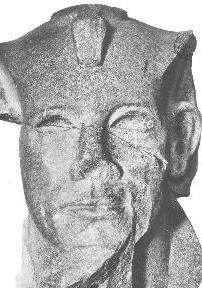
The rule of Egypt under the Hyksos had kings from diverse backgrounds as the groups of foreigners vied to dominate Egypt. There was no "single" monarch but rather a collection of independent states under a variety of foreign kings. The Egyptians were ashamed and angered at the loss of their state and called these kings Heka-Khaswt or "Rulers of the Foreign Lands." It was the Greeks that termed the word Hyksos. The Hyksos invasion had psychological effect on the Egyptians because they had never been conquered and they were shamed by conquest by an opportunistic army of nomadic tribesmen. Interestingly enough, the Hyksos appeared to have adopted Egyptian manners, laws, and theories of monarchy. However the Hyksos dream of becoming Egyptian died within a century with the resistance of a ferocious Egyptian family. Amosis the general who finally drove out the Hyksos founded the 18th Dynasty and ushered in the era of the New Kingdom. (On Left is the head of a Hyksos ruler).

15th Dynasty Rulers

c. 1650-1550 BC

parallel with the 16th & 17th Dynasties

Rulers Included:

Sheshi

Yakubher Meruserre

Khyan Seuserenre

Apepi I (Auserre)

Apepi II (Aqenenre)

16th Dynasty Rulers

c. 1650-1550 BC

parallel with the 15th & 17th Dynasties

various minor Hyksos rulers and local governments

17th Dynasty Rulers

c. 1650-1550 BC

parallel with the 15th & 16th Dynasties

Rahotep (Sekhemrewahkhaw)

Sobekemsaf I (Sekhemreshedtawy)

Intef VI (Sekhemrewepmaat)

Intef VII (Nebkheperre)

Intef VIII (Sekhemreherhermaat)

Sobekemsaf II (Sekhemrewadjkhaw)

Senakhtenre

Seqenenre

Kamose