Showing posts with label Third Intermediate Period. Show all posts

14 May 2009

Late Period

By the time the Late Period began the international prestige of Egypt had declined to almost ruin and the troubles of the Third Intermediate Period was only escalating. The Late Period started with the 25th dynasty to the 31st dynasty which concluded all of the Egyptian kings every to sit on the Egyptian throne.

Egypt's allies had fallen firmly into the sphere of influence from Assyria. While Egypt ousted Assyria in size and wealth, Assyria had a greater supply of timber allowing the production of more charcoal needed for iron-smelting and thus giving Assyria a greater supply of iron weaponry. This single difference became critical during the Assyrian invasion of Egypt in 670 BC. Despite numerous victories against the Assyrians, Thebes was eventually occupied and Memphis was sacked. The 25th dynasty ended with its rulers stuck in the backwater of the city of Napata.

The 26th dynasty were client kings established by the Assyrians. Stability reigned for a time until the Persians came unto the scene. The Persians had already taken Babylon and Egypt was no match. Egypt was defeated and the Persian king Cambyses, now assumed the formal title of Pharaoh. For a time the Egyptians were controlled by the Assyrian satrap but a one man who founded the 28th dynasty, Amyrtaeus, prince of Sais, rebelled against the Persians. The Persians were defeated, for about 6 years.
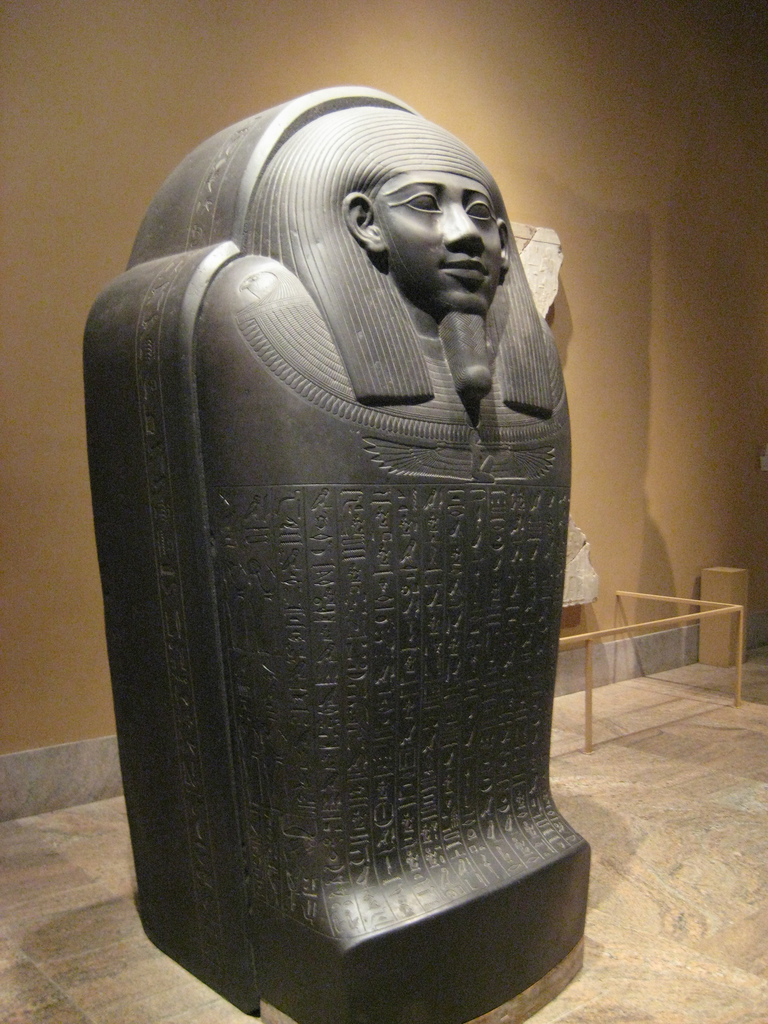
The 29th Dynasty ruled from the city of Mendes not not quite 20 years. The 30th dynasty then came and attempted to reestablish Egyptian art but failed with the Persians reoccupied in 343 BC. The 31st dynasty signaled the beginning of Egyptians never to sit on the throne again as the Persians dominated throughout Egypt. Egypt was now lost as the great empire she had once been.

25th Dynasty Rulers

Alara | c. 780-760 BC

Kashta | c. 760-747 BC

Piye | c. 747-712 BC

Shebaka | c. 712-698 BC

Shebitku | c. 698-690 BC

Taharqa | c. 690-664 BC

Tantamani | c. 664-657 BC

26th Dynasty Rulers

Ammeris | c. 715-695 BC

Stephinates | c. 695-688 BC

Nekaub | c. 695-688 BC

Nekau | c. 672-664 BC

Psamtek I | c. 664-610 BC

Nekau II | c. 610-594 BC

Psamtek II | c. 595-589 BC

Apries | c. 589-570 BC

Ahmose |c. 570-526 BC

Psamtek III |c. 526-525 BC

27th Dynasty Rulers

Cambyses | c. 525-522 BC

Darius I | c. 521-486 BC

Xerxes I | c. 486-466 BC

Artaxerxes I | c. 465-424 BC

Xerxes II | c. 424 BC

Sogdianus | c. 424 BC

Darius II | c. 424-404 BC

Artaxerxes II| c. 404-402 BC

28th Dynasty Rulers

Amyrtaios | c. 405-399 BC

29th Dynasty Rulers

Nepherites I | c. 399-393 BC

Hernebkha | c. 393-391 BC

Psammuthis | c. 392-390 BC

Hakoris | c. 392-380 BC

Nepherites II | c. 380 BC

30th Dynasty Rulers

Nectanebo I | c. 380-362 BC

Teos | c. 362-360 BC

Nectanebo II| c. 360-342 BC

31st Dynasty Rulers

Artaxerxes III Ochus | c. 342-337 BC

Arses | c. 337-335 BC

Darius III Codomannus | c. 335-332/30 BC

13 May 2009

Third Intermediate Period

The golden age of Egypt was waning and the Third Intermediate Period began. Characterized by the country's fracturing kingship the priests were becoming increasingly powerful. Ranging from the 21st dynasty to the 24th dynasty the country started off being ruled by the pharaoh Smendes I from the city of Tanis and the High Priests of Amun ruling at Thebes ruling the south of the country.

The country was reunited for a time in the 22nd dynasty but again fell into a civil war engulfing people between the forces of Pedubast, who had proclaimed himself Pharaoh versus the existing line of Takelot II/Osorkon B. Osorkon eventually won the battles but it lead to little relief from the fighting. Egypt then fell back into the dark ages while being ruled under numerous city states within the once great land.

At the end of the Third Intermediate Period the Nubians to the south took full advantage of this division and political instability. The ruler Piye marched north into Egypt and defeated the combined might of several native Egyptian rulers Peftjaubast, Osorkon IV of Tanis, Iuput II of Leontopolis and Tefnakht of Sais. This was the beginning of the 25th dynasty.

With the weakening of single royal authority in the Third Intermediate Period, the temple network emerged as a dominant sphere for political aspirations, social identification, and artistic production. Kings became the doormats for the priests doors.

Little architecture took place during the Third Intermediate Period. However, the creation of bronze temple statuaries of gods, kings, and great temple officials flourished as the bronze age was dawning. Temples now became with the sanctity and safety they offered, favored burial sites for all people. Metal working was hitting an amazing high as gold and other metals were being used elaborately.

Instead of emphasis being placed on the pharaoh alone is was placed on the pharaoh as the child/son of a divine pair. This is seen on a series of delicate relief-decorated vessels and other small objects chiefly in faience and also precious metal. Manifested architecturally in the emergence and development this was seen as well in subordinate temples where the birth of a juvenile god identified with the sun god and the king was celebrated.

21st Dynasty Rulers

Pharaohs in the city of Tanis:

Smendes | c. 1069-1043 BC

Amenemnisu | c. 1043-1040 BC

Pinodjem I | c. 1040-992 BC

Amenemope | c. 992-984 BC

Osorkon I | c. 984-978 BC

Siamun | c. 978-959 BC

Pinodjem II |c. 959-945 BC

Priest in Thebes:

Herihor

Piankhi

Masahart

Djedkhonsefankh

Menkheperre

Iuput

Sheshonq II

22nd Dynasty Rulers

Shoshenq I | c. 945-924 BC

Nimlot I | c. 924

Osorkon I | c. 924-909 BC

Takelot | c. 909-? BC

Shoshenq II | c. ?-883 BC

Osorkon II | c. 883-855 BC

Takelot II | c. 860-835 BC

Shoshenq III | c. 835-783 BC

Pami | c. 783-773 BC

Shoshenq V | c. 773-735 BC

Osorkon IV | c. 735-712 BC

23rd Dynasty Rulers

the main branch of rulers was in Thebes:

Pedubastis I | c. 828-803 BC

Shoshenq IV | c. 803-797 BC

Osorkon III | c.797-769 BC

Takelot III | c. 769-774 BC

Osorkon IV | c. 774-754 BC

Iuput II | c. 754-725 BC

rulers in Hermopolis:

Thotemhat |

Nimlot III |

Djehutiemhat |

rulers in Heracleopolis:

Peftjauwybast |

Nakhke |

rulers in Tanis:

Sekhemkare |

Shepseskare-Imere |

Neferkare-Pepi |

Pedubastis II |

24th Dynasty Rulers

Osorkon |

Tefnakhte I |

Bakenranef |

Padinemti |

Tefnakhte II|c. ?-747 BC

12 May 2009

The New Kingdom Period

At the end of the Second Intermediate Period the Theban rulers of Dynasty 17 drove out the Hyksos kings. This started the beginning of the Egyptian Empire, or the New Kingdom Period. Ranging from the 18th-20th dynasties it is perhaps the most famous of all the ages because of the kings it saw sit on the throne. The successors of Dynasty 17 conducted such military campaigns that they extended Egypt's influence in the Near East and established Egyptian control of Nubia to the fourth cataract. As a consequence, the pharaohs gathered unimaginable wealth which allowed them to reinstate themselves as gods and lavish wealth into the religious system.

Thebes remained a main cultural and religious center throughout the New Kingdom Period. It was here that the pharaohs built their mortuary temples and were laid to rest mass rock-cut tombs decorated with exquisite paintings and painted reliefs illustrating religious texts concerning the afterlife. Due to the growing demand of the new tombs a town was established near Thebes to the west for the workers who thrived off of the work of kings. Here at Deir el-Medina the workers left an unimaginable wealth of information about life in an ancient Egyptian community of artisans and craftsmen.

The New Kingdom Period is now known for the monumental architecture, estuaries honoring the gods and pharaohs, political stability, economic prosperity, and countless artistic masterpieces. This time also contained some of Egypt's most famous pharaohs including Ahmose I, Hatshepsut, Thutmose III, Amenhotep III, Akhenaten and Tutankhamen. Queen Hatsheput is a legend who concentrated on expanding Egypt's external trade, Thutmose III was the Napoleon of Egypt who expanded Egypt's army and wielded it with great success, and King Tut is the mysterious boy king.

Next to Tutankhamen, Amenhotep IV is one of the most famous pharaohs of the 18th Dynasty. He is the one who changed his name to Akhenaten to establish the worship of the Aten and whose exclusive worship of the Aten is often interpreted as history's first instance of monotheism. (Biblical scholars disagree however) Due to his quick betrayal of the old ways of the Egyptian religion Akhenaten's religious fervor is one of the reason why he was subsequently written out of Egyptian history and most traces of him destroyed (or attempts at least).

Ramses II, the Great, ruled during the 19th Dynasty and he sought to recover territories in the Levant that had been held by the 18th Dynasty lost due to Akhenaten's lack of interest outside of Egyptian borders. Ramses II is also famed for the large number of children he sired by his various wives and concubines. The mass funerary complex in the Valley of the Kings he built to house his family has proved to be the largest funerary complex in Egypt by far.

To close the New Kingdom Period, 20th dynasty pharaoh Ramses III was the last great king. In Year 8 of his reign, the Sea Peoples invaded Egypt by land and sea and Ramses III defeated them in world reknown battles. He claimed that he incorporated them as his subjects and settled them in Southern Canaan, although evidence suggests that they forced their way into Canaan. Cost to battles the Sea Peoples exhausted Egypt's treasury and aided in the gradual decline of the Egyptian Empire in abroad and at home. These difficulties were recorded with the first known labor strike in history occurring during Year 29 of Ramses III's reign. Food rations for royal tomb-builders and artisans in the village of Deir el Medina could not be provisioned and the people went on strike.

After Ramesses III's death the decline was quick and Egypt had seen its best years fly by as she headed again into a dark period, the Third Intermediate Period. As Egypt was beset by a series of droughts, below-normal flooding levels of the Nile, famine, civil unrest and official corruption she was done with the glory days.

18th Dynasty Rulers

Ahmose | c. 1550-1525 BC

Amenhotep I/Djeserkare | c. 1525-1504 BC

Thutmose I/Aakheperkare | c. 1504-1492 BC

Thutmose II | c .1492-1473 BC

Hatshepsut/Maatkare | c. 1473-1458 BC

Thutmose III/Menkheperre | c. 1458-1425 BC

Amenhotep II/Aaakheperure | c. 1427-1400 BC

Thutmose IV/Menkheperure | c. 1400-1390 BC

Amenhotep III/Nebmaatre | c. 1390-1352 BC

Amenhotep IV/Akhenaten/Neferkheperurawaenre | c. 1352-1336 BC

Neferneferuaten | c. 1336 BC

Tutankhaten/Tutankamen/Nebkheperure | c. 1336-1327 BC

Ay/Kheperkheperure | c. 1327-1323 BC

Horemheb/Djeserkheperure | c. 1323-1295 BC

19th Dynasty Rulers

Ramses I/Menpehtyre | c. 1295-1294 BC

Seti I/Menmaatre | c. 1294-1279 BC

Ramses II/Usermaatre Setepenre | c. 1279-1213 BC

Merenptah | c. 1213-1203 BC

Amenmessu | c. 1203-1200 BC

Sety II | c. 1200-1194 BC

Saptah | c. 1194-1188 BC

Tausret | c. 1188-1186 BC

20th Dynasty Rulers

Setnakht | c. 1186-1184 BC

Rameses III/Usermaatre Meryamun | c. 1184-1153 BC

Ramses IV | c. 1153-1147 BC

Ramses V | c. 1147-1143 BC

Ramses VI | c. 1143-1136 BC

Ramses VII | c. 1136-1129 BC

Ramses VIII | c. 1129-1126 BC

Ramses IX | c. 1126-1108 BC

Ramses X | c. 1108-1099 BC

Ramses XI | c. 1099-1069 BC