Showing posts with label Second Intermediate Period. Show all posts

12 May 2009

The New Kingdom Period

At the end of the Second Intermediate Period the Theban rulers of Dynasty 17 drove out the Hyksos kings. This started the beginning of the Egyptian Empire, or the New Kingdom Period. Ranging from the 18th-20th dynasties it is perhaps the most famous of all the ages because of the kings it saw sit on the throne. The successors of Dynasty 17 conducted such military campaigns that they extended Egypt's influence in the Near East and established Egyptian control of Nubia to the fourth cataract. As a consequence, the pharaohs gathered unimaginable wealth which allowed them to reinstate themselves as gods and lavish wealth into the religious system.

Thebes remained a main cultural and religious center throughout the New Kingdom Period. It was here that the pharaohs built their mortuary temples and were laid to rest mass rock-cut tombs decorated with exquisite paintings and painted reliefs illustrating religious texts concerning the afterlife. Due to the growing demand of the new tombs a town was established near Thebes to the west for the workers who thrived off of the work of kings. Here at Deir el-Medina the workers left an unimaginable wealth of information about life in an ancient Egyptian community of artisans and craftsmen.

The New Kingdom Period is now known for the monumental architecture, estuaries honoring the gods and pharaohs, political stability, economic prosperity, and countless artistic masterpieces. This time also contained some of Egypt's most famous pharaohs including Ahmose I, Hatshepsut, Thutmose III, Amenhotep III, Akhenaten and Tutankhamen. Queen Hatsheput is a legend who concentrated on expanding Egypt's external trade, Thutmose III was the Napoleon of Egypt who expanded Egypt's army and wielded it with great success, and King Tut is the mysterious boy king.

Next to Tutankhamen, Amenhotep IV is one of the most famous pharaohs of the 18th Dynasty. He is the one who changed his name to Akhenaten to establish the worship of the Aten and whose exclusive worship of the Aten is often interpreted as history's first instance of monotheism. (Biblical scholars disagree however) Due to his quick betrayal of the old ways of the Egyptian religion Akhenaten's religious fervor is one of the reason why he was subsequently written out of Egyptian history and most traces of him destroyed (or attempts at least).

Ramses II, the Great, ruled during the 19th Dynasty and he sought to recover territories in the Levant that had been held by the 18th Dynasty lost due to Akhenaten's lack of interest outside of Egyptian borders. Ramses II is also famed for the large number of children he sired by his various wives and concubines. The mass funerary complex in the Valley of the Kings he built to house his family has proved to be the largest funerary complex in Egypt by far.

To close the New Kingdom Period, 20th dynasty pharaoh Ramses III was the last great king. In Year 8 of his reign, the Sea Peoples invaded Egypt by land and sea and Ramses III defeated them in world reknown battles. He claimed that he incorporated them as his subjects and settled them in Southern Canaan, although evidence suggests that they forced their way into Canaan. Cost to battles the Sea Peoples exhausted Egypt's treasury and aided in the gradual decline of the Egyptian Empire in abroad and at home. These difficulties were recorded with the first known labor strike in history occurring during Year 29 of Ramses III's reign. Food rations for royal tomb-builders and artisans in the village of Deir el Medina could not be provisioned and the people went on strike.

After Ramesses III's death the decline was quick and Egypt had seen its best years fly by as she headed again into a dark period, the Third Intermediate Period. As Egypt was beset by a series of droughts, below-normal flooding levels of the Nile, famine, civil unrest and official corruption she was done with the glory days.

18th Dynasty Rulers

Ahmose | c. 1550-1525 BC

Amenhotep I/Djeserkare | c. 1525-1504 BC

Thutmose I/Aakheperkare | c. 1504-1492 BC

Thutmose II | c .1492-1473 BC

Hatshepsut/Maatkare | c. 1473-1458 BC

Thutmose III/Menkheperre | c. 1458-1425 BC

Amenhotep II/Aaakheperure | c. 1427-1400 BC

Thutmose IV/Menkheperure | c. 1400-1390 BC

Amenhotep III/Nebmaatre | c. 1390-1352 BC

Amenhotep IV/Akhenaten/Neferkheperurawaenre | c. 1352-1336 BC

Neferneferuaten | c. 1336 BC

Tutankhaten/Tutankamen/Nebkheperure | c. 1336-1327 BC

Ay/Kheperkheperure | c. 1327-1323 BC

Horemheb/Djeserkheperure | c. 1323-1295 BC

19th Dynasty Rulers

Ramses I/Menpehtyre | c. 1295-1294 BC

Seti I/Menmaatre | c. 1294-1279 BC

Ramses II/Usermaatre Setepenre | c. 1279-1213 BC

Merenptah | c. 1213-1203 BC

Amenmessu | c. 1203-1200 BC

Sety II | c. 1200-1194 BC

Saptah | c. 1194-1188 BC

Tausret | c. 1188-1186 BC

20th Dynasty Rulers

Setnakht | c. 1186-1184 BC

Rameses III/Usermaatre Meryamun | c. 1184-1153 BC

Ramses IV | c. 1153-1147 BC

Ramses V | c. 1147-1143 BC

Ramses VI | c. 1143-1136 BC

Ramses VII | c. 1136-1129 BC

Ramses VIII | c. 1129-1126 BC

Ramses IX | c. 1126-1108 BC

Ramses X | c. 1108-1099 BC

Ramses XI | c. 1099-1069 BC

11 May 2009

Second Intermediate Period

The Second Intermediate Period began with the 15th dynasty and ended with the 17th dynasty. This period in Egyptian history is known for not only being dark like the First Intermediate Period, but also for the invasion of the Hyksos. Marking a period when Ancient Egypt once again fell into disarray between the end of the Middle Kingdom and the start of the New Kingdom the Second Intermediate Period is when the Hyksos made their appearance in Egypt and whose reign comprised the 15th and 16th Dynasties. The large-scale immigration of foreigners into the Nile Valley during the Middle Kingdom eventually led to the end of the Middle Kingdom as these foreigners remained non-naturalized "Asiatics." In other words they established their own communities and lived by their own laws. As their numbers increased they became a threat to the already weak power of the Egyptian monarchy.

The 13th Dynasty was unable to hold onto the entire territory of Egypt and the provincial ruling family in Xois (located in the marshes of the western Delta) broke away to form the 14th Dynasty. This splintering of the land accelerated after Sobekhotep IV for it was during his reign that the Hyksos may have made their first appearance. Around 1720 BC the Hyksos took control of the town of Avaris (modern Tell ed-Dab'a/Khata'na). The Hyksos overran Egypt led by Salitis, the founder of the 15th Dynasty, which was succeeded by a group of Hyksos princes and chieftains, who ruled in the eastern Delta with their local Egyptian vassals called by modern Egyptologists the 16th Dynasty. (On Right is the sarcophagus of Ah-Hotep-Mother of the last Hyksos pharaoh of Egypt)

Around the time Memphis and Itj-tawy fell to the Hyksos, the native Egyptian ruling house in Thebes declared its independence from the vassal Hyksos dynasty in Itj-tawy and became the 17th Dynasty. The 17th dynasty became the salvation of Egypt and eventually lead the war of liberation that drove the Hyksos back into Asia.

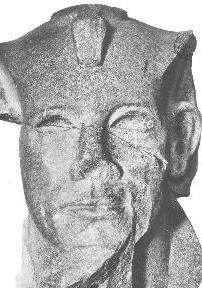
The rule of Egypt under the Hyksos had kings from diverse backgrounds as the groups of foreigners vied to dominate Egypt. There was no "single" monarch but rather a collection of independent states under a variety of foreign kings. The Egyptians were ashamed and angered at the loss of their state and called these kings Heka-Khaswt or "Rulers of the Foreign Lands." It was the Greeks that termed the word Hyksos. The Hyksos invasion had psychological effect on the Egyptians because they had never been conquered and they were shamed by conquest by an opportunistic army of nomadic tribesmen. Interestingly enough, the Hyksos appeared to have adopted Egyptian manners, laws, and theories of monarchy. However the Hyksos dream of becoming Egyptian died within a century with the resistance of a ferocious Egyptian family. Amosis the general who finally drove out the Hyksos founded the 18th Dynasty and ushered in the era of the New Kingdom. (On Left is the head of a Hyksos ruler).

15th Dynasty Rulers

c. 1650-1550 BC

parallel with the 16th & 17th Dynasties

Rulers Included:

Sheshi

Yakubher Meruserre

Khyan Seuserenre

Apepi I (Auserre)

Apepi II (Aqenenre)

16th Dynasty Rulers

c. 1650-1550 BC

parallel with the 15th & 17th Dynasties

various minor Hyksos rulers and local governments

17th Dynasty Rulers

c. 1650-1550 BC

parallel with the 15th & 16th Dynasties

Rahotep (Sekhemrewahkhaw)

Sobekemsaf I (Sekhemreshedtawy)

Intef VI (Sekhemrewepmaat)

Intef VII (Nebkheperre)

Intef VIII (Sekhemreherhermaat)

Sobekemsaf II (Sekhemrewadjkhaw)

Senakhtenre

Seqenenre

Kamose

Middle Kingdom Period

The Middle Kingdom Period typically includes the last half of the 11th dynasty through the 14th dynasty. The Middle Kingdom Period marked the beginning of the end when the once proud land of Egypt splintered into dozens of independent states was reunited by two kings, Intef and Mentuhotep. Together they re-established order and re-instituted the institution of the Egyptian king. However the Pharaohs of this period were not as powerful as before. Instead they showed themselves as taking care of their people, instead of being as god-kings like in the Old Kingdom. They had become the shepherds of the people while the the nomarchs were the new power. Under the pharaohs of the Middle Kingdom trade with foreign countries began again, irrigation projects were repaired, and the writing of texts started up from scratch. While the power of the pharaoh never really returned local cities and villages stayed independent under their local governors. With this change became a major threat to the monarchy. It seems that Amenemhet I was murdered by a conspiracy among local governors. The situation stayed perilous until Sesostris III finally broke the local governors and return the monarchy to its previous power.

Architecture started again including the building of fortresses. Amenemhet I built the series of fortresses that are known as the Wall of the Princes and Senusret I built a series of 13 fortresses from the Second Cataract up along the west coast of the Nile to protect against invaders.

The Middle Kingdom was, in general, a peaceful time. During Senusret III expeditions were sent to push the borders of Egypt outward. This was mostly the extent of military campaigns during the Middle Kingdom. However, Senusret III also regained the power once held by Mentuhotep I by instituting several internal reforms.

During the 13th dynasty the pharaohs lost more and more control as the later kings of that dynasty came to power. The actual close of the Middle Kingdom is sketchy but in general is concluded to have ended after the 14th dynasty. When the 14th dynasty took control of the western Delta and the 15th Dynasty took control of the eastern Delta the Second Intermediate Period of Egypt began.

11th Dynasty Rulers

Ruled At Thebes:

c. 2125-2025 BC

Mentuhotep I

Inyotef I (Sehertawy)

Inyotef II (Wahankh)

Inyotef III (Nakhtnebtepnefer)

Ruled A United Egypt:

c. 2055-1985 BC

Mentuhotep II

Mentuhotep III (Sankhkare)

Mentuhotep IV (Nebtawyre)

12th Dynasty Rulers

Amenemhat (Sehetepibre) | 1985-1955 BC

Senusret (Kheperkare) | 1965-1920 BC (1955-1965 BC joint rule with father)

Amenemhat II (Nubkaure) | 1922-1878 BC

Senusret III (Khakaure) | 1874-1855 BC

Amenemhat III ( Nimaatre) | 1855-1808 BC

Queen Sobekneferu ( Sobekkare) | 1799-1795 BC

13th Dynasty Rulers

parallel with the 14th dynasty & rulers/dates vary according to experts

c. 1795-1650 BC

Wegaf Khutawyre

Ameny Intef IV (Amenemhet V/Sankhibre)

Hor Auibre

Sobekhotep II (Amenmehet VI/Sekhemre Khutawy)

Khendjer Userkare

Sobekhotep III (Sekhemre Sewadjtawy)

Neferhotep I (Khasekhemre)

Sobekhotep IV (Khaneferre)

Merneferre Ay

Merhotepre Ini

Sankhenre Sewadjtu

14th Dynasty Rulers

parallel with the 13th dynasty & rulers/dates vary according to experts

c. 1795-1650 BC

Nehesy Aasehre

Yakobaam