11 May 2009

Middle Kingdom Period

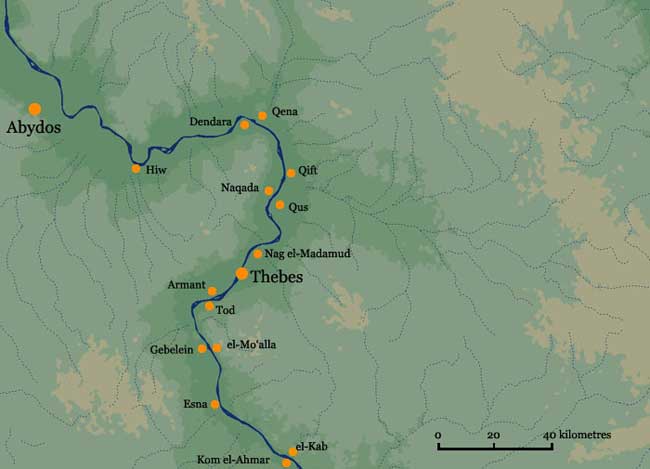
The Middle Kingdom Period typically includes the last half of the 11th dynasty through the 14th dynasty. The Middle Kingdom Period marked the beginning of the end when the once proud land of Egypt splintered into dozens of independent states was reunited by two kings, Intef and Mentuhotep. Together they re-established order and re-instituted the institution of the Egyptian king. However the Pharaohs of this period were not as powerful as before. Instead they showed themselves as taking care of their people, instead of being as god-kings like in the Old Kingdom. They had become the shepherds of the people while the the nomarchs were the new power. Under the pharaohs of the Middle Kingdom trade with foreign countries began again, irrigation projects were repaired, and the writing of texts started up from scratch. While the power of the pharaoh never really returned local cities and villages stayed independent under their local governors. With this change became a major threat to the monarchy. It seems that Amenemhet I was murdered by a conspiracy among local governors. The situation stayed perilous until Sesostris III finally broke the local governors and return the monarchy to its previous power.
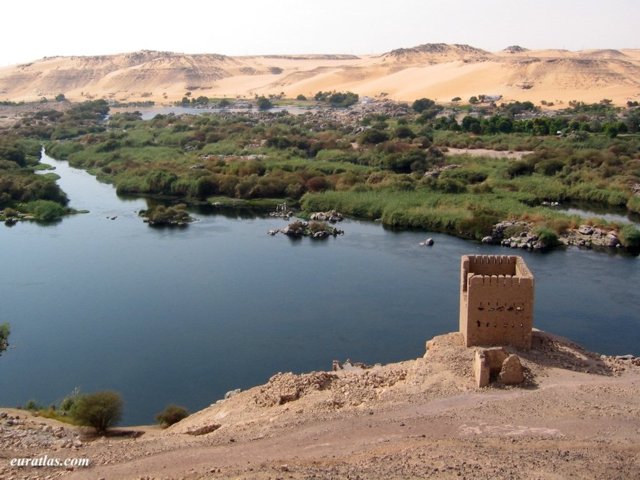
Architecture started again including the building of fortresses. Amenemhet I built the series of fortresses that are known as the Wall of the Princes and Senusret I built a series of 13 fortresses from the Second Cataract up along the west coast of the Nile to protect against invaders.

The Middle Kingdom was, in general, a peaceful time. During Senusret III expeditions were sent to push the borders of Egypt outward. This was mostly the extent of military campaigns during the Middle Kingdom. However, Senusret III also regained the power once held by Mentuhotep I by instituting several internal reforms.

During the 13th dynasty the pharaohs lost more and more control as the later kings of that dynasty came to power. The actual close of the Middle Kingdom is sketchy but in general is concluded to have ended after the 14th dynasty. When the 14th dynasty took control of the western Delta and the 15th Dynasty took control of the eastern Delta the Second Intermediate Period of Egypt began.

11th Dynasty Rulers

Ruled At Thebes:

c. 2125-2025 BC

Mentuhotep I

Inyotef I (Sehertawy)

Inyotef II (Wahankh)

Inyotef III (Nakhtnebtepnefer)

Ruled A United Egypt:

c. 2055-1985 BC

Mentuhotep II

Mentuhotep III (Sankhkare)

Mentuhotep IV (Nebtawyre)

12th Dynasty Rulers

Amenemhat (Sehetepibre) | 1985-1955 BC

Senusret (Kheperkare) | 1965-1920 BC (1955-1965 BC joint rule with father)

Amenemhat II (Nubkaure) | 1922-1878 BC

Senusret III (Khakaure) | 1874-1855 BC

Amenemhat III ( Nimaatre) | 1855-1808 BC

Queen Sobekneferu ( Sobekkare) | 1799-1795 BC

13th Dynasty Rulers

parallel with the 14th dynasty & rulers/dates vary according to experts

c. 1795-1650 BC

Wegaf Khutawyre

Ameny Intef IV (Amenemhet V/Sankhibre)

Hor Auibre

Sobekhotep II (Amenmehet VI/Sekhemre Khutawy)

Khendjer Userkare

Sobekhotep III (Sekhemre Sewadjtawy)

Neferhotep I (Khasekhemre)

Sobekhotep IV (Khaneferre)

Merneferre Ay

Merhotepre Ini

Sankhenre Sewadjtu

14th Dynasty Rulers

parallel with the 13th dynasty & rulers/dates vary according to experts

c. 1795-1650 BC

Nehesy Aasehre

Yakobaam

10 May 2009

First Intermediate Period

The First Intermediate Period, often referred to as the Dark Period in Egyptian history included the 7th-11th dynasties. There is very little monumental evidence that survives from this period as it was a time in history where rule of Egypt was roughly divided between two competing power bases. The first base was at Heracleopolis in Lower Egypt and the other base was at Thebes in Upper Egypt. Being the Dark Period instead of progressing forward as a civilization Egypt slipped backwards. Temples were pillaged and violated, their existing artwork was vandalized, and the statues of kings were broken or destroyed as a result of political chaos. During the 11th dynasty Upper and Lower Egypt were reunited under a Theban king.

While some of the causes of the downfall of the Old Kingdom are merely hypothetical, one reason that is often used is the extremely long reign of Pepi II. Pepi II was the last major pharaoh of the 6th Dynasty who ruled until he was 94 years old. Pepi II outlived many of his heirs and therefore created problems with succession in the royal household. Amidst the disorganization the Old Kingdom disintegrated. Provincial nomarchs also arose as a problem as their power grew. Towards the end of the Old Kingdom the positions of the nomarchs had became hereditary. As these nomarchs grew increasingly powerful and influential they became more independent from the king. As they raised their own armies intense rivalries and warfare arose between regions. With a dryer climate due to the Nile's recent low flood plain dissolution of centralized kingship increased.

For more First Intermediate Period intense information go here.

7th Dynasty Rulers

c. 2181-? BC

Netrikare

Menkare

Neferkare II

Neferkare III

Djedkare II

Neferkare IV

Merenhor

Menkamin I

Nikare

Neferkare V

Neferkahor

8th Dynasty Rulers

c. ?-2125 BC

Neferkare VI

Neferkamin II

Ibi I

Neferkaure

Neferkauhor

Neferirkare II

9th & 10th Dynasty Rulers

Herakleoplitan Rulers:

c. 2160-2025 BC

Khety Meryibre

Khety Wahkare

Merykare

Ity

11th Dynasty Rulers

Ruled At Thebes:

c. 2125-2025 BC

Mentuhotep I

Inyotef I (Sehertawy)

Inyotef II (Wahankh)

Inyotef III (Nakhtnebtepnefer)

Ruled A United Egypt:

c. 2055-1985 BC

Mentuhotep II

Mentuhotep III (Sankhkare)

Mentuhotep IV (Nebtawyre)

09 May 2009

Old Kingdom Period

The period following the Early Dynastic Period is one of the most well known of all Egyptian history. Sporting some of the most memorable pharaohs, achievements, and defining highlights of all Egyptian culture most people can recognize the Old Kingdom Period. Comprised of the 3rd-6th dynasties the Old Kingdom Period brings the rise of the great pyramids.

During the Old Kingdom Period, also known as the Age of the Pyramids, capital was located in Memphis. During this time names that have not been gotten first appear: Djoser (who had the step pyramid built), Imhotep (Djoser's advisor), and a host of others. During this time pharaoh became universally deified and the people worshiped their pharaoh as a god, believing that he ensured the annual flooding of the Nile that dictated their lives.

The Old Kingdom Period was one of the richest and most creative period in Egyptian history. With all of Egypt's pyramids built at this time - the growth in population and wealth allowed the pharaohs to afford the vast amounts of labor and materials to these monuments to, themselves.

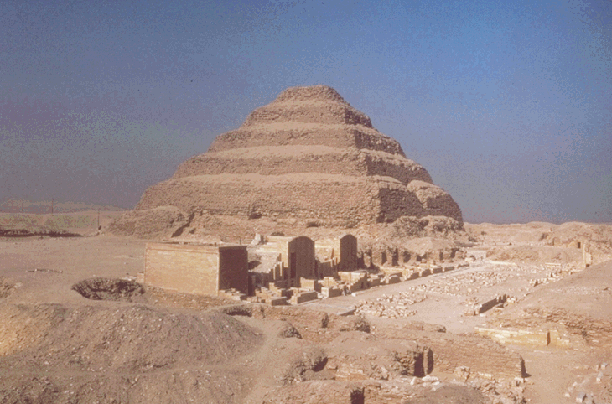
Djoser's pyramid, called the Step Pyramid, has world wide recognition. A series of 6 bases, or mastabas built on top of one another it is the beginning of the revolution of the pyramids. Unlike the Great Pyramid of Giza the sides were not smooth but it was a start to the classical Egyptian pyramid. (Seen here on the right is Djoser's Step Pyramid and complex)

In the Fourth Dynasty Snofru built for himself 3 pyramids. With a greater mass of stones than any other pharaoh, he built the now collapsed pyramid in Meidum, the Bent Pyramid at Dahshur, and the Red Pyramid at North Dahshur. Now for the one of the most famous pharaohs in history, Khufu. The builder of the Great Pyramid of Giza some later Egyptian literature describes him as a cruel tyrant, who imposed forced labor on his subjects to complete his pyramid. (Seen here on the left is the Great Pyramid of Giza along with the two smaller pyramids later built by Khafre/Chephren and Menkaure/Mycerinus)

From the Fourth Dynasty on the administration of the country was highly organized and controlled by civil servants from the royal residence at Memphis, where the pharaoh god reigned supreme. The efficiency of the administration is seen in the building of the pyramids. Estimated that the Great Pyramid of Giza when complete contained about 2,300,000 blocks of stone ( of an average weight of 2½ tons), all of which had to be transported from quarry to site, there is no better example of such an administration.

3rd Dynasty Rulers

Sanakhte (Nebka) | 2650 - 2630 BC

Netjerykhet (Djoser) | 2630 - 2611 BC

Sekhemkhet (Djoser Teti) | 2611 - 2603 BC

Khaba | 2603 - 2599 BC

Huni | 2599 - 2575 BC

4th Dynasty Rulers

Snefru | 2575 - 2551 BC

Khufu (Cheops) | 2551 - 2528 BC

Djedefre | 2528 - 2520 BC

Khafre (Chephren) | 2520 - 2494 BC

Menkaure (Mycerinus) | 2490 - 2472 BC

Shepseskaf | 2472 - 2467 BC

5th Dynasty Rulers

Userkaf | 2465 - 2458 BC

Sahure | 2458 - 2446 BC

Neferirkare Kakai | 2477-2467 BC

Shepseskare Ini | 2426 - 2419 BC

Neferefre | 2419 - 2416 BC

Niuserre Izi | 2453 - 2422 BC

Menkauhor | 2422 - 2414 BC

Djedkare Izezi | 2388 - 2356 BC

Unas | 2375-2345 BC

6th Dynasty Rulers

Teti | 2345 - 2333 BC

Pepy I (Meryre) | 2332 - 2283 BC

Merenre Nemtyemzaf | 2283 2278 BC

Pepy II (Neferkare) | 2278 - 2184 BC