
Here is a fun, quick video done by Zahi Hawass. The video explains the "Mummy Recipe."
24 January 2011


22 January 2010
Egyptian Costumes
 Check out our new affiliate Egyptian Costumes! Need a costume for a party or looking ahead for Halloween? - then don't forget to look here! You could be the perfect Mummy, Pharaoh or Cleopatra. Costumes come for men, women, and kids. Rule with infamous beauty, scare your friends, or be the god of the night - your choice! - and you can get your perfect costume from Egyptian Costumes!

21 January 2010
The Land of Osiris Documentary/Lecture
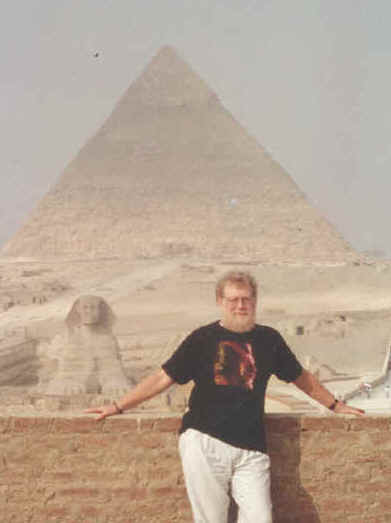 Egyptologist Stephen Mehler has spent over 30 years in the Egyptian field looking for the answers to the common and complex questions to ancient Egypt. He has found that an indigenous oral tradition still exists in Egypt and he has been able to uncover and study the mysteries of ancient Egypt with the help of a living master of this tradition, Abd'El Hakim Awyan. This lecture by this man is very intriguing. Depending of your view point from which you view history you will either love him or find him crazy. A good and must listen for Egypt lovers. You can visit his website here.
Why Egypt Fell Documentary
 Here is a fabulous documentary exploring the fall of ancient Egypt. From the height of its empire to a collapse that leaves archaeologists and egyptologists alike searching for the answer. The reasoning's presented here are intriguing. Take a look.
Watch Why Ancient Egypt Fell in Educational | View More Free Videos Online at Veoh.com
19 January 2010
Horus
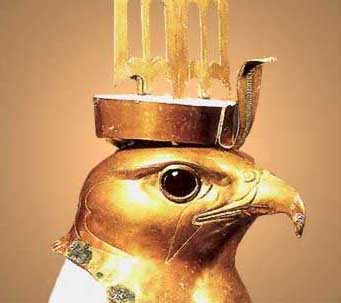 Horus quickly rose throughout Egypt as a supreme god - eventually merging his identity with Ra. He was acknowledged as Prince of the Gods. He is known by numerous names, including: Heru, Hor, Harendotes/Har-nedj-itef (Horus the Avenger), and Har-Pa-Neb-Taui (Horus Lord of the Two Lands). To the Egyptians, Horus was seen as the patron of the living Pharaoh, rulers, war, young men, light, the sun, and various others. Horus was worshiped throughout all of Egypt in his numerous forms.
Horus has no true form just as all Egyptian deities, however, he is most commonly remembered as the falcon headed god. He was seen as a hawk or falcon, a falcon headed lion, a bull, the double crown, the winged disk, the Udjat, a sphinx, iron, and a blacksmith. He was also symbolized behind the Pharaoh sitting on his neck as a falcon spreading its wings to either side of the Pharaoh's head supposedly whispering guidance in his ear.
The Egyptian Pharaoh was supposed to be the earthly embodiment of Horus. At the same time, the Pharaohs were the followers of Ra and so Horus picked up the association with the sun as well. To the Egyptian people this solar deity became identified as the son of Osiris. As with all the Egyptian deities, conflicts arose from newly created deities, modified deities, and combined deities, and so numerous distinct forms arose for Horus just like the others. They can be divided into two groups, solar and Osirian, based on the parentage of the particular form of Horus. If he is said to be the son of Isis, he is Osirian - otherwise he is a solar deity. The solar Horus was called the son of Atum, or Re, or Geb and Nut.
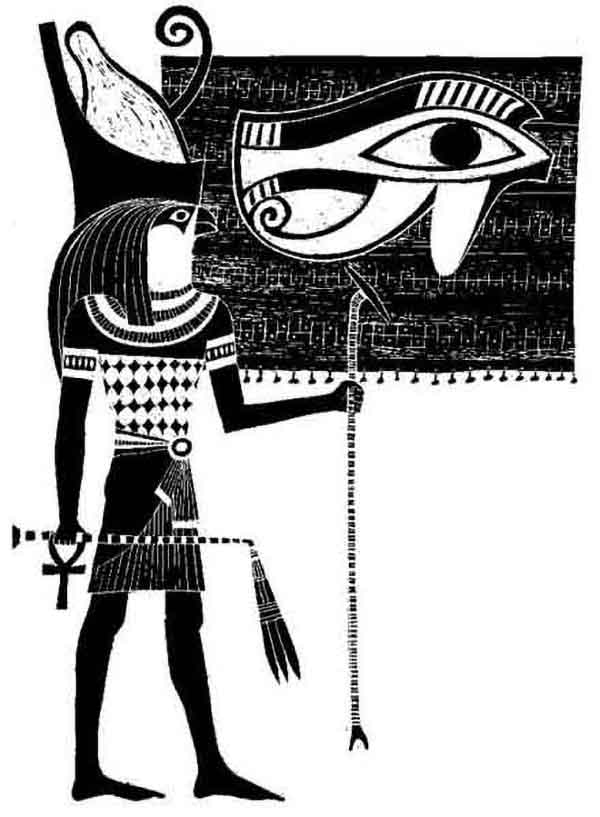 The most famous story involving Horus is the Legend of Osiris and Isis. In this legend Horus is the child of Osiris, begot when his father Osiris was brought back to life by his mother, Isis. He grows to manhood and avenges the death of his father by attacking his Uncle Set. The two are said to battle daily to ensure the safety of the world where Horus ensures the safety of the world.
Since Horus was said to be the sky, he rapidly became considered to also contain the sun and moon. It was said by the Egyptians that the sun was one of his eyes and the moon the other, and that they traversed the sky when as a falcon, Horus flew across the sky. According to legend the reason that the moon was not as bright as the sun was explained by a tale, known as the Contesting of Horus and Set. It was said that Set, the patron of Lower Egypt, and Horus, the patron of Upper Egypt, had battled for Egypt brutally, with neither side victorious, until eventually the gods sided with Horus. During the struggle, Set had lost a testicle, explaining why the desert, which Set represented, is infertile. Horus' right eye was gouged out, which explained why the moon was so weak compared to the sun. It was also said that during a new-moon, Horus became blinded and while blind, was considered dangerous as Horus sometimes attacked his friends after mistaking them for enemies.
A few of Horus' persona's include:
Harmakhet-Horus was god of the dawn and of the morning sun. Harmakhet's form is that of a sphinx or a sphinx with the head of a ram. It is thought that the Great Sphinx, staring at the eastern horizon, represents him.
Harsiesis-Horus was the son of Osiris and Isis. He was conceived magically after the death of Osiris, and Isis hid him away on an island to protect him from Set. In this form he is worshipped as an infant.
Horus the Elder (Haroeris)-Horus was a god of light, his left eye was the sun and his right eye the moon. He was the brother of Osiris and Set, and the husband of Hathor.
Ra Harakhte-A combined god of Horus and Ra, he was the god of the sun and took it on its daily path across the sky. He is represented as a falcon or a falcon-headed man wearing the solar disk and the double crown.
07 December 2009
About Us
 Ancient Egypt 101 was created by the co-founder of TwilightBlog.net after experiencing how to own and operate a website. Egypt has always been her first love and hence the forging ahead for the ultimate goal of a Ph.D. in Egyptology at the University of Memphis. Ancient Egypt 101 was founded on the idea and desire to provide a well balanced look at Ancient Egypt to all people, especially those in a teaching capacity. Tools, videos, suggestions, and basic information are all provided on the site to provide a foundation and starting point. "Excessive" detail is not given on the site for sake that you explore Egypt on your own for that detail in a book by a professional.
If you ever have any suggestions for the site feel free to e-mail the creator with your suggestions and/or comments.
We are not established or associated with any agency, museum, or historical society and all information is presented after careful research. However, keep in mind that documenting Egyptian history is not an easy task nor is always agreed on.
04 December 2009
Treasure Wars: Egypt's Curse
 This short video featuring Dr. Zahi Hawass arguing that artifacts need to be returned to Egypt. Because this artifacts deal with Egyptian history and culture he feels that they have been stolen and does not understand why countries will not graciously return them.
Egyptian Seagoing Vessels Artifacts Discovered
 While this may have been five years ago, it is still amazing to re-read about the discoveries of ancient Egypt. This remarkable woman, Kathryn Bard, made the discovery of caves in the Wadi Gawasis. There, after such hard work, she was rewarded with one of the greatest treasures for an archaeologist:
Five years ago, Kathryn Bard made a remarkable discovery in the Egyptian desert. While digging with an archaeological team along the Red Sea coast, she reached into the opening of a wall — and felt nothing. Further excavation revealed an ancient man-made cave containing a mud brick, a small grinding stone, shell beads, and part of a box.
Days later, the team, led by Bard, a College of Arts & Sciences associate professor of archaeology, and Italian colleague Rodolfo Fattovich, uncovered the entrance to a second cave. Inside they found a network of larger rooms filled with dozens of nautical artifacts: limestone anchors, 80 coils of knotted rope, pottery fragments, ship timbers, and two curved cedar planks that likely are steering oars from a 70-foot-long ship. According to hieroglyphic inscriptions, the ship was dispatched to the southern Red Sea port of Punt by Queen Hatshepsut during the 15th century B.C.
“It just gave me chills to stumble across such a frozen moment in time,” Bard recalls. “The ropes were perfectly preserved. They looked as if they’d been coiled yesterday.”
The team discovered seven caves at Wadi Gawasis containing relics dating back 4,000 years. The first pieces ever recovered from Egyptian seagoing vessels, they offer a tantalizing glimpse into an elaborate network of Red Sea trade.
Best known for its exports of gold, incense, ebony, elephant ivory, and exotic animals, the exact location of the port city Punt remains a mystery; Bard believes it was in present-day eastern Sudan. Inscriptions discovered more than a century ago indicate that Egyptian pharaohs mounted naval expeditions to Punt as far back as the Old Kingdom (2686 –2125 B.C.), and Bard’s findings give credibility to the legend in the form of stelae, limestone slabs installed in niches outside of the second cave.
Most of the stelae are indecipherable, worn blank from centuries of wind and sand. But one was in near-perfect condition. “I found it lying facedown in the desert,” Bard says, “and it contained the complete historical text of two expeditions, one to Punt and one to Bia-Punt, as ordered by King Amenemhat III, who ruled at about 1800 B.C.”
In addition to the stelae, the team recovered more than 40 cargo boxes, 2 bearing painted inscriptions reading “The wonders of Punt.”
“It was like a modern-day packaging label,” Bard says. “The preservation was incredible.”
Since the initial discovery, the team has returned to Wadi Gawasis each year and uncovered more artifacts: clay sealings, boxes and bags, cooking tools, fragments of a letter written on a sheet of papyrus. “We even found a piece of pottery that describes how to prepare a meal for 100 men,” she says. “The Egyptians kept records of everything.”
Bard will make her fifth voyage to Egypt in late December. “We think there’s another cave,” she says. “And through analysis of satellite images, we think we’ve found some sort of walled structure beneath the harbor that may be a ship slipway or a dock.”
The team limits its excavations to six weeks between fall and spring semesters to avoid summer heat and humidity — not to mention the desert’s sizable population of poisonous vipers, which hibernate during the winter.
It all sounds very Raiders of the Last Ark, but don’t compare Bard to Indiana Jones. “He bungles into anything, anywhere,” she says. “There’s no planning, no organization, just lots of adventure. Real archaeology is nothing like the movies.”
Bard has never outrun a Nazi, but she has had a narrow escape, and it led her to Wadi Gawasis. In 1998, she and an excavation team fled war-torn Ethiopia via a mountainous one-lane dirt road as bombs erupted in the distance. The experience, though harrowing, brought her to Egypt.
“We knew we couldn’t go back to Ethiopia,” Bard says, “so we decided to explore the other end of the Red Sea. Little did we know what we’d find.”
See the videos here!
{via BU.edu}
03 December 2009
Tuthmosis II
 Tuthmosis II was pharaoh during the 18th Dynasty. While the length of his reign is constantly in dispute, he was the immediate successor of his father Thutmose I. Tuthmosis II's rule was relatively short and is estimated to be 1512 B.C.E. - 1503 B.C.E. (Oxford History states 1492 B.C.E. - 1479 B.C.E. while the Chronicle of the Paraohs 1518 B.C.E. - 1504 B.C.E.). Had his two older brothers, Wadjmose and Amenmose, not died, Tuthmosis II would not have become pharaoh. the eldest sons of Tuthmosis I, leaving him as the only heir. The eldest son of Mutnefert, a minor royal queen, Tuthmosis II died in his early thirties. His throne name was A-kheper-en-re, which means "Great is the Form of Re."
Family

Tuthmosis II was married to Hatshepsut, his half-sister. Marrying within the family was not uncommon among the royal families as royal blood was thought to run through the women. Because of the frequency of the intermarrying Tuthmosis II himself was both physically and mentally weak.
Tuthmosis II had one son by a minor wife, Iset, who would be his heir, Tuthmosis III. Tuthmosis would not see the throne until his step-mother's death. Tuthmosis II had two daughters by Hatshepsut, but she bore him no sons. Tuthmosis II say his wife's ambitions and attempted to secure his son's reign, but Tuthmosis III was still too young when Tuthmosis II died. Hatshepsut took the advantage and named herself as regent, and then taking on the full regalia of the pharaoh.
ImpactsTuthmosis II had one son by a minor wife, Iset, who would be his heir, Tuthmosis III. Tuthmosis would not see the throne until his step-mother's death. Tuthmosis II had two daughters by Hatshepsut, but she bore him no sons. Tuthmosis II say his wife's ambitions and attempted to secure his son's reign, but Tuthmosis III was still too young when Tuthmosis II died. Hatshepsut took the advantage and named herself as regent, and then taking on the full regalia of the pharaoh.

Tuthmosis II was able preserved his father's, Tuthmosis I, empire with two campaigns. In the first year of his reign Tuthmosis II crushed a revolt in Nubia and later he led a campaign against the Shosu Bedouin of southern Palestine who were also threatening the peace. Testiments of his campaigns are inscripted in the temple at Deir el-Bahari and a rock-cut stele at Sehel south of Aswan.
Tuthmosis II's building projects included traces of a temple just north of the temple of Medinet Habu on the West Bank at Luxor (aka, Thebes). This temple is known as Shespet-ankh, Chapel of Life, and was finished by Tuthmosis III. Tuthmosis II also built a pylon shaped limestone gateway in front of the Fourth Pylons forecourt at Karnak (which also had to be completed by Tuthmosis III). Scenes on the gate depict Tuthmosis II with Hatshepsut, sometimes Hatshepsut alone, Tuthmosis II is shown receiving crowns, and his daughter, Nefrure and wife, Hatshepsut receiving life from the gods.
DeathTuthmosis II's building projects included traces of a temple just north of the temple of Medinet Habu on the West Bank at Luxor (aka, Thebes). This temple is known as Shespet-ankh, Chapel of Life, and was finished by Tuthmosis III. Tuthmosis II also built a pylon shaped limestone gateway in front of the Fourth Pylons forecourt at Karnak (which also had to be completed by Tuthmosis III). Scenes on the gate depict Tuthmosis II with Hatshepsut, sometimes Hatshepsut alone, Tuthmosis II is shown receiving crowns, and his daughter, Nefrure and wife, Hatshepsut receiving life from the gods.
 Upon his early death, Tuthmosis II's son Tuthmosis III was too young to rule and Hatshepsut took over as regent. Tuthmosis II's mummy was found in a royal cache of mummies at Deir el-Bahari above Hatshepsut's Mortuary Temple in 1881 along with 39 other mummies. He had been interred along with other 18th and 19th dynasty leaders including Ahmose I, Amenhotep I, Tuthmosis I, Tuthmosis III, Ramses I, Seti I, Ramses II, and Ramses IX, as well as the 21st dynasty pharaohs Psusennes I, Psusennes II, and Siamun. His mummy can now be seen at the Egyptian Museum in Cairo. His original tomb which should have been in the Valley of the Kings has yet to be found. Tuthmosis II's mummy was unwrapped by Gaston Maspero on July 1, 1886, who said that "He [Tuthmosis II] had scarcely reached the age of thirty when he fell a victim to a disease of which the process of embalming could not remove the traces. The skin is scabrous in patches, and covered with scars, while the upper part of the skull is bald; the body is thin and somewhat shrunken, and appears to have lacked vigour and muscular power."
15 November 2009
Isis
 Isis is the ancient Egyptians' goddess of fertility and motherhood. Isis literally means: female of throne (i.e. Queen of the throne). Her original headdress was an empty throne chair belonging to Osiris, her murdered husband. As Isis was the personification of the throne, she was an important source of the Pharaoh's power.
Noted in the Book of the Dead, Isis is said to be she who gives birth to heaven and earth, knows the orphan, knows the widow, seeks justice for the poor, and shelter for the weak. Amoung Isis' seemingly endless titles are: Queen of Heaven, Mother of the Gods, The One Who is All, Lady of Green Crops, The Brilliant One in the Sky, Great Lady of Magic, Mistress of the House of Life, She Who Knows How To Make Right Use of the Heart, Light-Giver of Heaven, Lady of the Words of Power, and Moon Shining Over the Sea.
In the heaven's Isis is the star Sept (Sirius). Sept marks the beginning of a new year and announces the Inundation of the Nile. Isis held numerous positions with numerous names. A few include being light-giver at this season of the year called Khut, the mighty earth-goddess Usert, the Great Goddess of the Underworld Thenenet, the power which shot forth the Nile flood Sati and Sept, the embracer of the land and producer of fertility by her waters Anqet, the producer and giver of life Ankhet, the goddess of cultivated lands and fields Sekhet, and the goddess of the harvest Renenet.
 Isis' husband, Osiris, was lord of the Underworld, and as such Isis was the great lady of the Underworld. In this capacity she assisted in transforming the bodies of the blessed dead into those wherein they were to live in the realm of Osiris. Readers often remember the duo of Isis and Osiris as it was Osiris that was killed by his brother Set. Isis resurrected him and became pregnant, but Set cut Osiris into numerous pieces scattering them throughout the land. Osiris then entered the Underworld and became the rightful ruler.
Isis is portrayed as a woman wearing a long sheath dress and crowned with the hieroglyphic sign for a seat, sometimes holding a lotus, and sometimes as a sycamore tree. After Isis assimilated Hathor, Isis' headdress was replaced with that of Hathor: the horns of a cow on her head, and the solar disc between them. Isis is generally depicted with her son, Horus, with a crown and a vulture, and sometimes as a kite bird flying above Osiris's body. She often holds the ankh.
12 November 2009
Hathor
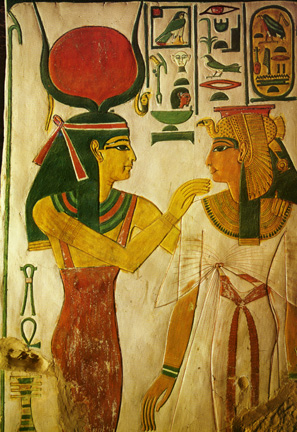 Hathor (meaning, "The House of Horus") was known to the Ancient Egyptians as the goddess of the sky, the sun, music, dance and the arts. She was often symbolized as a cow bearing the sun disk between her horn and a woman in queenly raiment wearing the sun disk and horns on her head. Dating back to the predynastic time, Hathor is one of the, if not the, oldest goddess for the Egyptians. She was originally associated with the pharaoh as his queen. Hathor became the incarnation of dance and one of Inspiration. Worship of Hathor had her male and female priests dancing in rituals and people flocking to have their dreams explained.
Hathor was originally a personification of the Milky Way, which was considered to be the milk that flowed from the udders of a heavenly cow. It was throughout the ages that Hathor took on her other characteristics, some that overshadowded others, and other identities and forms. She is almost a confusing goddess. As an ancient goddess the Egyptians attempted to keep her throughout the periods but added or took away from her. Thus her marriages, children, names, and characteristics vary according to period. Here we'll just discuss the few the prevailed most often.
 Hathor is also Mehturt (for about 3,000 years), meaning great flood. This aspect of Hathor had the Egyptians identifying her as responsible for the yearly inundation of the Nile. Being recognized as responsible for the flooding of the Nile also had Hathor seen as a herald of imminent birth (when the amniotic sac breaks it is an indicator that the child is due to be born). This eventually expanded to Hathor being a goddess of fertility.
For a short time Hathor was associated with Sekhmet (a war goddess) as Sekhmet-Hathor. Due to their similar physical associations they were combined to create the lioness goddess. One version claims this story: as the Eye of Ra - defender of the sun god - Hathor was sent out to punish the people (in the form of Sekhmet). She slaughtered people by the hundreds and Ra relented seeing the utter destruction and commanded her to stop. Sekhment refused as she was blood thirsty. To stop the slaughter, bear was colored red (to resemble blood) and poured over the killing fields. When Sekhmet drank the beer, she became drunk and drowsy, and slept for three days. When she awoke she had no taste for human flesh and mankind was saved. From then on she was renamed her Hathor. As a result, soldiers also prayed to Hathor/Sekhmet to give them her strength and focus in battle.
Hathor was the mother of Horus and wife of Ra. Although as Egyptian mythology continued she was said to be married to Thoth, as Ra and Atum were the same deity, making it complicated for her to be wife to her son whom she created. As wife of Ra, Hathor held the title Mistress of Heaven and the Eye of Ra. She is also later said to be Hathor's wife. In reality, she was probably meant to have just been combined with the original wives of the gods creating a stronger deity, not replacing the wives of old.
08 November 2009
Amun/Amen
 Among the group of the most well known ancient Egyptians gods is Amun (also seen as Amen). He is the second largest god on record for the ancient Egyptians in his dual personality as Amun-Ra. Record of Amun is first seen in the early Pyramid Texts. Amun's attributes are sometimes in question, but are fairly understood to be the literal meaning of his name: The Essential and The Hidden. As a creator deity Amun was the champion of the poor and central to personal piety. Amun was self created and is not considered to be immanent within creation nor was creation seen as as an extension of himself. Amun's position as King of the Gods developed to the point of virtual monotheism were other gods became manifestations of him.
Amun is seen as the breath of life, a creative force, and co-creator of the Ba. However, Amun did not engender the world/creation. The pharaohs attributed all their successful enterprises to Amun and they lavished their wealth and captured spoil on the construction of temples dedicated to Amun. It is the worship of Amun that Akhenaten banned (among other gods) and attempted to destroy during his reign as he believed the priests and the worship to have become corrupt. The cult of Amun-Ra became so powerful that its priesthood grew very large and influential, so that at one point, priests of the deity did actually rule Egypt during the 21st Dynasty. Amun while suppose to be sexless but is seen as the male aspect of the persona while Amunet is the female aspect. His consort is seen at Mut.
Amun was most often combined with the god, Ra. Seen as the dual god, Amun-Ra, he was believed to represented one of ancient Egypt's most complex theologies. Amun-Ra became a hidden, secret god as the Egyptians called him "the hidden one" or "the secret one." This dual personality is also known as the Sun God, the main aspect of Ra. Amun-Ra's name and physical appearance were the unknown, thus his unknowable essence. While suppose to be seperate versions of the god, Amun and Amun-Ra have in many ways become interchangeable.
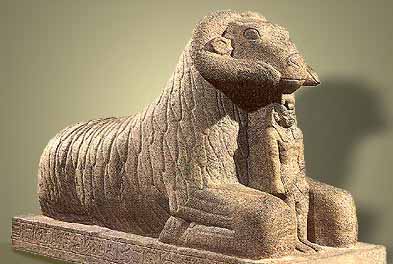 Hymns to Amun often read that he is "hidden to his children, "and "hidden to gods and men." In the later periods the name Amen appears to been connected with the root men - "to abide, to be permanent" - and one of the attributes applied to him was Eternal.
Amun is seen in five forms: 1) As a man, when he is seen seated on a throne, and holding in one hand the scepter, and in the other the symbol of "life." 2) As a man with the head of a frog, whilst his female counterpart Amunet has the head of a uraeus. 3) As a man with the head of a uraeus, whilst his female counterpart has the head of a cat. 4) As an ape. 5) As a lion couching upon a pedestal.
06 November 2009
Ra
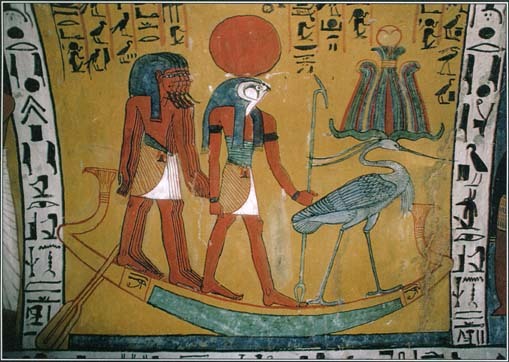 Ra (also spelled Re) dominates most of Egyptian religion as one of the primary deities throughout the span of the empire. Ra was the patron of the sun, heaven, Kingship of the pharaohs, power, and divine light. He is seen as one of the head gods as it is he who bestows power unto the pharaohs giving them the divine right to rule the Two Lands. Although not a contemporary view, E. A. Wallis Budge (1857-1934) claimed that Ra was the one god of Egyptian monotheism; from which all other deities were aspects, manifestations, phases, or forms.
Ra's physical appearance changed throughout the periods of ancient Egypt, however he is most often seen as a falcon headed pharaoh wearing the sun disk on his head. However, the easiest way to identify Ra is by the Sun disk over an item, generally speaking. Ra was worshiped as king of the gods (hence giving him the right to bestow Kingship) and the father of all creation. As the sun god, he commanded the chariot that rode across the sky during the day, with noon being of heightened importance. Like Osiris, Ra is the only other Egyptian god who is not on the earth. As an aging god, Ra is still powerful, yet too old to deal with his children any longer. This has caused him to go exclusively into the sky and watch over the world while his great-grandson, Horus, rules over the earth and the gods in his stead.
Acknowledged as the father of all, Ra had 4 children. However, as mythology changed so did Ra's wife or significant other. Early on Hathor was said to be Ra's wife, however, that changed into Hathor being Ra's daughter, then that Ra originally created Hathor as Sekhment (the fierce warrior lioness) as the Avenging Eye of Ra but then changed her into Hathor when his anger subsided. It is agreed that the following 4 are Ra's children: Nut (sky), - Shu, Tefnut, and Geb (Earth). Expanding the family, Nut and Geb created 4 children: Set, Osiris, Isis, and Nephthys. Isis and Osiris then had their only child Horus, who took over Ra's watch over earth. (Some accounts have Shu and Tefnut as Ra's only children, they in turn had Nut and Geb)
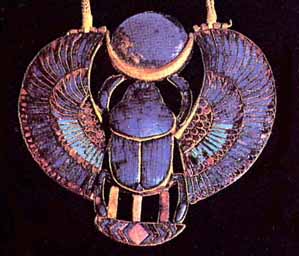 Over time Ra also became a composite deity with the Atum. Known as Ra-Atum or Atum-Ra they were a primordial creative force. In the form of Atum-Ra, Ra began to symbolized the setting sun and its journey through the underworld to its rising again in the east. He also is generally seen with the god Amun, creating Amun-Ra as the Hidden God/the Sun God.
----------------
Here is an Egyptian legend concerning Ra:
The Legend of Ra and Isis
Now Isis was a woman who possessed words of power; her heart was wearied with the millions of men, and she chose the millions of the gods, but she esteemed more highly the millions of the khu's. And she meditated in her heart, saying, "Cannot I by means of the sacred name of God make myself mistress of the earth and become a goddess like unto Ra in heaven and upon earth?"
Now, behold, each day Ra entered at the head of his holy mariners and established himself upon the throne of the two horizons. The holy one had grown old, he dribbled at the mouth, his spittle fell upon the earth, and his slobbering dropped upon the ground. And Isis kneaded it with earth in her hand, and formed thereof a sacred serpent in the form of a spear; she set it not upright before her face, but let it lie upon the ground in the path whereby the great god went forth, according to his heart's desire, into his double kingdom. Now the holy god arose, and the gods who followed him as though he were Pharaoh went with him; and he came forth according to his daily wont; and the sacred serpent bit him. The flame of life departed from him, and he who dwelt among the cedars was overcome. The holy god opened his mouth, and the cry of his majesty reached unto heaven. His company of gods said, "What hath happened?" and his gods exclaimed, "What is it?" But Ra could not answer, for his jaws trembled and all his members quaked; the poison spread swiftly through his flesh just as the Nile invadeth all his land.
When the great god had established his heart, he cried unto those who were in his train, saying, "Come unto me, O ye who have come into being from my body, ye gods who have come forth from me, make ye known unto Khepera that a dire calamity hath fallen upon me. My heart perceived it, but my eyes see it not; my hand hath not caused it, nor do I know who hath done this unto me. Never have I felt such pain, neither can sickness cause more woe than this. I am a prince, the son of a prince, a sacred essence which hath preceded from God. I am a great one, the son of a great one, and my father planned my name; I have multitudes of names and multitudes of forms, and my existence is in every god. I have been proclaimed by the heralds Tmu and Horus, and my father and my mother uttered my name; but it hath been hidden within me by him that begat me, who would not that the words of power of any seer should have dominion over me. I came forth to look upon that which I had made, I was passing through the world which I had created, when lo! something stung me, but what I know not. Is it fire? Is it water? My heart is on fire, my flesh quaketh, and trembling hath seized all my limbs. Let there be brought unto me the children of the gods with healing words and with lips that know, and with power which reacheth unto heaven." The children of every god came unto him in tears, Isis came with her healing words and with her mouth full of the breath of life, with her enchantments which destroy sickness, and with her words of power which make the dead to live. And she spake, saying, "What hath come to pass, O holy father? What hath happened? A serpent hath bitten thee, and a thing which thou hast created hath lifted up his head against thee. Verily it shall be cast forth by my healing words of power, and I will drive it away from before the sight of thy sunbeams."
The holy god opened his mouth and said, "I was passing along my path, and I was going through the two regions of my lands according to my heart's desire, to see that which I had created, when lo! I was bitten by a serpent which I saw not. Is it fire? Is it water? I am colder than water, I am hotter than fire. All my flesh sweateth, I quake, my eye hath no strength, I cannot see the sky, and the sweat rusheth to my face even as in the time of summer." Then said Isis unto Ra, "O tell me thy name, holy father, for whosoever shall be delivered by thy name shall live." [And Ra said], "I have made the heavens and the earth, I have ordered the mountains, I have created all that is above them, I have made the water, I have made to come into being the great and wide sea, I have made the 'Bull of his mother,' from whom spring the delights of love. I have made the heavens, I have stretched out the two horizons like a curtain, and I have placed the soul of the gods within them. I am he who, if he openeth his eyes, doth make the light, and, if he closeth them, darkness cometh into being. At his command the Nile riseth, and the gods know not his name. I have made the hours, I have created the days, I bring forward the festivals of the year, I create the Nile-flood. I make the fire of life, and I provide food in the houses. I am Khepera in the morning, I am Ra at noon, and I am Tmu at even." Meanwhile the poison was not taken away from his body, but it pierced deeper, and the great god could no longer walk.
Then said Isis unto Ra, "What thou hast said is not thy name. O tell it unto me, and the poison shall depart; for he shall live whose name shall be revealed." Now the poison burned like fire, and it was fiercer than the flame and the furnace, and the majesty of the god said, "I consent that Isis shall search into me, and that my name shall pass from me into her." Then the god hid himself from the gods, and his place in the boat of millions of years was empty. And when the time arrived for the heart of Ra to come forth, Isis spake unto her son Horus, saying, "The god hath bound himself by an oath to deliver up his two eyes" (i.e., the sun and moon). Thus was the name of the great god taken from him, and Isis, the lady of enchantments, said, "Depart, poison, go forth from Ra. O eye of Horus, go forth from the god, and shine outside his mouth. It is I who work, it is I who make to fall down upon the earth the vanquished poison; for the name of the great god hath been taken away from him. May Ra live! and may the poison die, may the poison die, and may Ra live!" These are the words of Isis, the great goddess, the queen of the gods, who knew Ra by his own name.
05 November 2009
The Great Pyramid Video Series
 An informational video series on the Great Pyramid at Giza. It includes history, architecture, and the chambers inside the pyramid itself. The videos are older, but nevertheless the quality of the information is still applicable, enjoyable, and up for plenty of discussion. A question is raised through the videos on whether or not the pyramid has a Christian Biblical significance, an interesting idea, although the evidence could be more convincing.
Pharaohs of the Sun Video Series
 Continuing with the extensive documentary of Egypt Golden Empire, Pharaohs of the Sun Video Series documents the New Kingdom of Ancient Egypt. Covering Amenhotep III, Akhenaten, Nefertiti, and Tutankhamen the documentary covers political achievements, military geniuses, and religious heresies.
04 November 2009
The Warrior Pharaohs Video Series
 A more in-depth video series on the glory of the New Kingdom and its warrior pharaohs. It covers the invasion of the Hyksos and Nubians, Hatsheput, and Tuthmosis III with awesome detail for a documentary.
Inside King Tutankhamen's Tomb
 While the thought of there being a curse surrounding the infamous King Tutankhamen is a little outdated (then again I believe they are using the word "curse" very loosely, more in the sense of a mystery), the evidence this crew believes they have found about his death and life is worth a some consideration. It is a reminder that we have no clue and that theories will constantly abound on Tut's death.
03 November 2009
Egypt's Last Great Pharaoh-Ramses II
 A documentary on Ramses II, also known as Ramses the Great, with some superb history. A must watch if you are looking for some good history on one of Egypt's most infamous rulers due to his achievements and political prowess.
Building the Great Sphinx at Giza Video Series
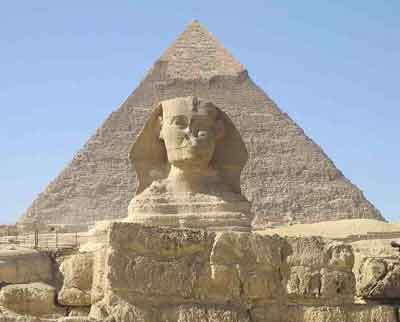 Here is an informational video series about the history of the Great Sphinx at Giza. Virtually nothing concrete is known about this great monument, but here they try to explore what can be found and understood about this beautiful piece of work. Did you know the Sphinx originally was painted?
PART 1:
http://www.youtube.com/watch?v=z8jJgi86HBE
PART 2:
http://www.youtube.com/watch?v=jDCJUnSS_1U
PART 3:
http://www.youtube.com/watch?v=aYrVe-EyELc
PART 4:
PART 5:
02 November 2009
Fall of Great Empires Video Series
 This series quickly documents the beginning of the Egyptian empire with the first half and its emphasize in its end with Cleopatra VII for the last half. It hits several highlights and achievements and numerous theories and myths surrounding ancient Egypt. Fairly solid documentary, a good watch.
Subscribe to:
Posts (Atom)
